Related Articles
Grayling Action Group
Jenny Joy and Lucy Lewis bring us up-to-date with the group's work over the winter and plans for the summer
Our work in Shropshire over the last six months has been very much a partnership project between local organisations and local people and so, firstly, we're very grateful to everybody who has taken part in any way.
Winter activities
Our winter meeting at Snailbeach Village Hall was lively and well-attended by our local Grayling transect walkers (from both Earl’s Hill and The Bog) and casual Grayling recorders from elsewhere in the county, as well as interested local people and representatives from the Shropshire Wildlife Trust, Butterfly Conservation Cheshire and the Oswestry & Borders Butterfly Group. What we find particularly inspiring about these get-togethers is the extent of discussion and debate between people who are directly involved in recording and conserving the Grayling.
Two winter work parties have since been organised by Mike Williams of West Midlands Butterfly and Moth Society (WM-BAMS), one at The Bog supported by Shropshire Council and one on the Long Mynd supported by the National Trust. The first was part of the Rescuing Rocks project (see below) and the second was at Grayling Rock where a colony was discovered in 2025. The focus was on removing gorse to improve Grayling habitat and raking lichens away from fescues.
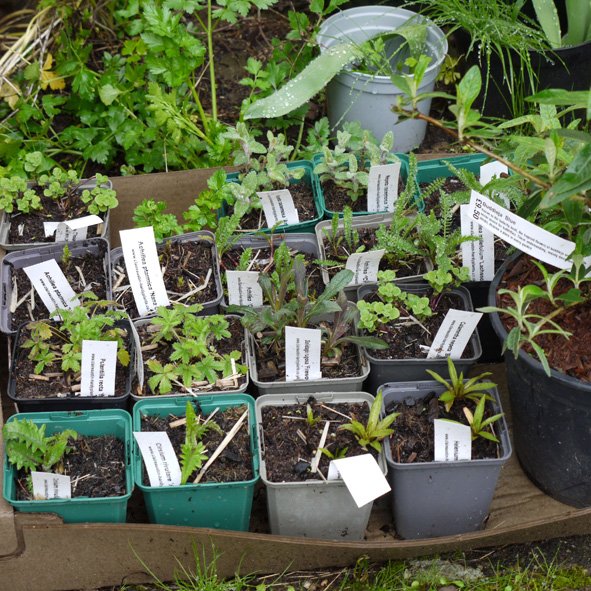
Funding from Butterfly Conservation enabled Phil Parkes to cut and collect bracken from The Bog for a second year, with the aim of restoring flower-rich grassland to provide nectar for various insects. To help in years when heather flowers late, Butterfly Conservation West Midlands has also funded plants for a nectar garden at The Bog Visitor Centre (with enthusiastic support from the team there).
 - cropped.jpg) Clearing gorse from the Long Mynd
Clearing gorse from the Long Mynd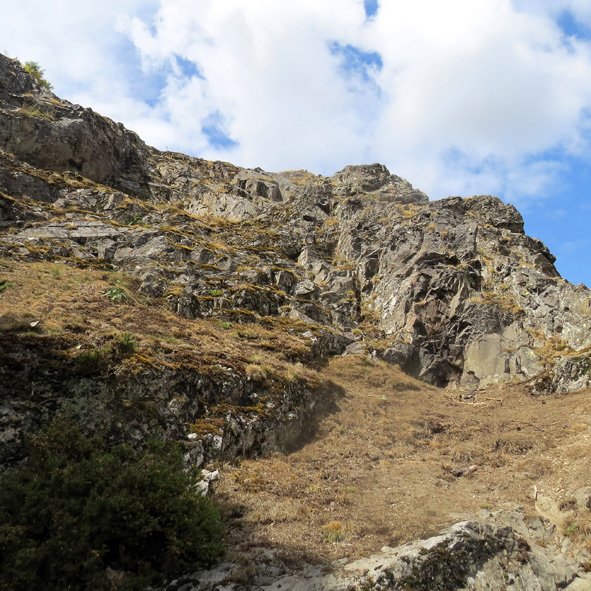 Grayling Rock after clearance
Projects
A Rescuing Rocks and Overgrown Relics project is underway on four former mining or quarrying sites owned by Shropshire Council in the Shropshire Hills National Landscape. The focus is on habitat restoration, involving scrub management and coppicing to expose more of the rocks and scree favoured by butterflies such as Common Blue and Grayling. Work has been done by volunteer groups, led by Shropshire Council’s Outdoor Partnership Team and the Shropshire Hills National Landscape Team. Funding came from Defra, as part of the UK Government’s 30by30 commitment to protect 30% of land and sea for nature by 2030. We've already seen the benefits and are keen to build on this success.
Working alongside other organisations in the area (notably Natural England and Shropshire Council), we proposed a Grayling Species Recovery Project in the new Stiperstones National Nature Reserve in late 2025. This area encompasses most of the former lead-mining sites that were occupied by Graylings. While unsuccessful, the proposal brought together and developed new ideas that we hope to progress.
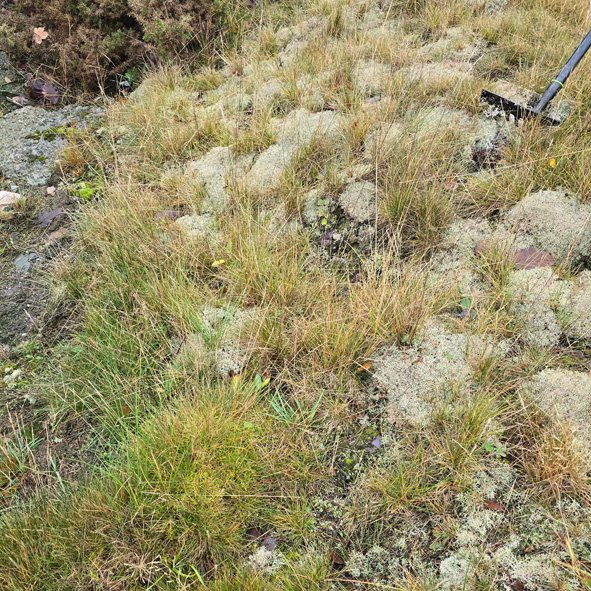 Lichen growing around fescues
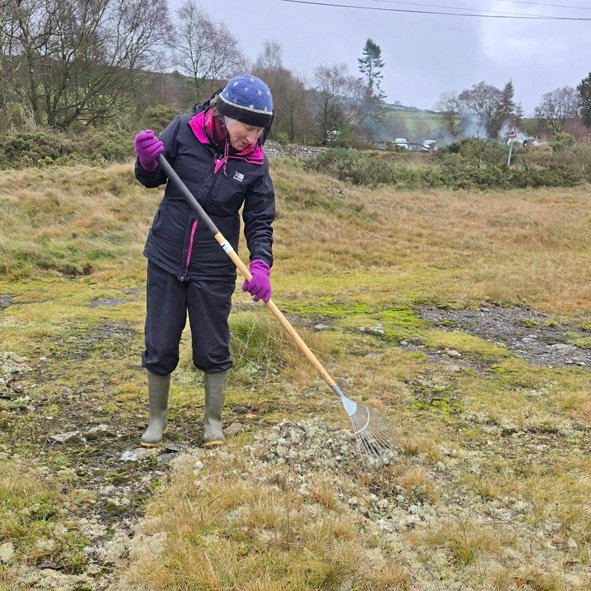 Raking lichen as part of an ongoing trial
Plans for this summer
We're planning a series of events, starting with planting the Grayling Nectar Garden at the Bog Visitor Centre on 13 April. This will be followed by a Big Grayling Survey Day on the Long Mynd on 22 July and a visit to Llangynog in Montgomeryshire at the head of the Tanat Valley (20 minutes from Llynclys) in early August. If you'd like to join any of these events, please let us know.
Lastly, we're keen to encourage everybody to look in other areas of Shropshire for new or overlooked Grayling colonies. We can suggest a few places to go, based on last year’s records, so please get in touch if you would like us to do this.
Contacts:
Jenny Joy (jenny.joy17@outlook.com)
Lucy Lewis (lemiller@btinternet.com)
Photos by Jenny Joy, Lucy Lewis and Mike Williams
 - cropped.jpg)