My Transect - Grafton Wood
George Davis tells us more about this site, how it's managed and how the results are monitored.
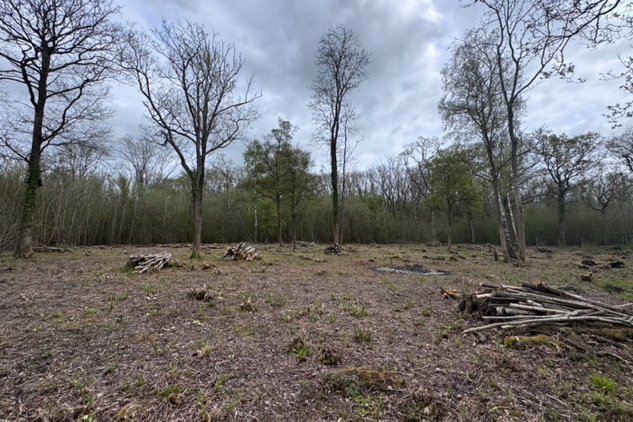
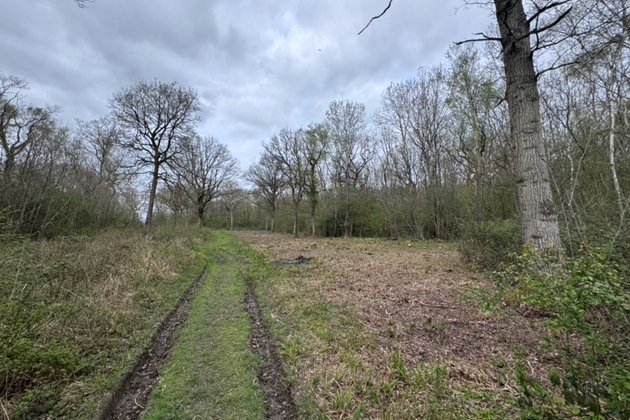
It was, apparently, 17°C and sunny, albeit a little breezy. My task was to walk two transects, collectively known as the ‘regen’ plots, both having recently been opened up. A lot of hard work went into creating, or at least rediscovering, two 200m-long rides. I was there to count butterflies, of which Grafton boasts 26 recorded species.
.jpg)
The Nature Reserve
Grafton Wood is the largest remnant of The Forest of Feckenham, comprising about 150 acres of hazel and ash coppice with oak standards.
The Nature Reserve has SSSI status, being ancient woodland (there's evidence of a 500-acre wood appearing in the Saxon Charters) with boundaries unchanged since at least 1700. Previously owned by the Croome Estate (c1730–1997), which did little management beyond planting two small plots of conifers and leasing the shooting rights, it is now jointly owned and managed by Worcestershire Wildlife Trust and Butterfly Conservation.
More recently, coppice management has been reintroduced in the centre of the wood and rides have been opened up to allow more light to reach the woodland floor.
Situated on a west-facing slope, the canopy is dominated by ash and oak. Most of the oak was planted at the end of the 19th century, though far older trees persist along the boundaries. Extensive blackthorn thickets occur around the margins and along the rides; these are being enhanced because they are valuable to the butterfly for which the wood has become best known – the Brown Hairstreak (it’s also become a major site for Wood White).
Maintenance work
I became involved at Grafton in September 2021, when I joined a volunteer work party managed by John Tilt, the Reserve Manager. I first met John, a former Chair of the Butterfly Conservation West Midlands, some years earlier when he gave a local talk about butterflies in general and Grafton butterflies in particular (I’d been interested in butterflies from the age of eight). Back then, he was looking for volunteers (he still is). Although I was keen, I was still working full-time and simply couldn’t commit. It was only when the Covid pandemic receded that I decided to retire. So, I turned up on a lovely Wednesday morning and joined a very dedicated and extremely knowledgeable bunch of volunteers; I've been doing it ever since.
Wednesday work parties run from mid-August to the end of March. I’ve progressed since the early days and can now be seen wielding a large petrol-driven brush-cutter. I clear brambles, roses, hazel and other invasive plants to make way for chain-sawing and coppice-clearing. There’s a core team of a dozen, sometimes more, that coppices, clears rides, mends fences and clears ditches. The work can be hard but is always satisfying.
Walking transects
When the work season ends, some of us walk Grafton’s various transects to count butterflies and moths. That has changed since I started back in 2022: four of us now rotate on a four-weekly cycle but I no longer walk two transects – I walk all 17 of Grafton’s transects (now 18, as we’ve opened up a new one for this season).
The full walk takes me three to three-and-a-half hours (it’s a big wood) but, when the sun shines and butterflies are on the wing, it's a truly magical place. I'm not sure if JRR Tolkien ever made it here, but he just might have done. I’ve now recorded all of Grafton’s 26 species (and an elusive Purple Emperor).
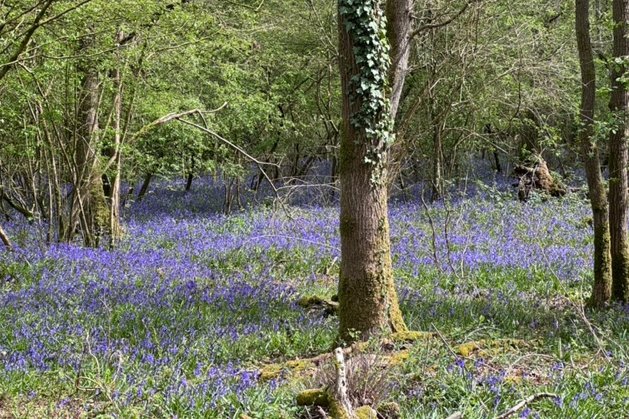
I've just returned from this year's first walk. It wasn’t quite as warm as that day four years ago but the sun made an appearance and, for the first and third hours, so did lots of butterflies: numbers were very good for Orange-tip, good for Brimstone and Peacock, plus the odd Comma and Speckled Wood. The bluebells were stunning and a couple of roe deer stood and stared at me – I wonder what they thought.
I recommend Grafton to anyone who enjoys walking through woodland: a little remote, very quiet and really rather beautiful. We're always looking for volunteers, especially as we're no longer in the first flush of youth. We understand how difficult it is for people (especially younger ones) to give up their time but come and have a look, then perhaps one day your circumstances will change as mine did.
Finally, on the subject of volunteering, WM-BAMS is looking for people to join our committee, especially those living in Birmingham & the Black Country, Staffordshire or Herefordshire. It’s not onerous and we're quite a nice bunch.
How to get to Grafton Wood
- Grid Reference SO972560 (OS map 150)
- Postcode WR7 4PG
- Nearest town Worcester
Take the A422 eastwards from Worcester and park at The Flyfords Hall (SO963557, WR7 4PG) and follow the footpath from the top of the car park eastwards to the reserve. Various entrances to the wood are reached via public footpaths and bridleways over the surrounding farmland. This ground can be soft and uneven in places, and especially so the rides in the wood.
Caution
Always be aware of ticks, although they're not a major issue at Grafton Wood. Most ticks are little more than an irritation but a few can transmit Lyme disease, a potentially serious illness which is treatable with antibiotics if diagnosed early. I know: I contracted it in 2012 in, believe it or not, Lyme Regis (the disease was originally diagnosed in Lyme, Massachusetts, US). It wasn't much fun, so be aware and perhaps cover up.