Related Articles
UK Butterfly Recorders' Meeting 2026
Mike Williams reports back from this online meeting to discuss the 2025 butterfly season.
I'm not sure how many WM-BAMS supporters attended the Butterfly Recorders' Meeting in March. This annual event used to be held in Birmingham but is now online via Zoom, which I feel is a shame and, given the technical gremlins this year, a few more might agree with me now. Anyway, it's always an interesting event and the findings have now been officially published: most of us who regularly record butterflies will not be surprised by the results.
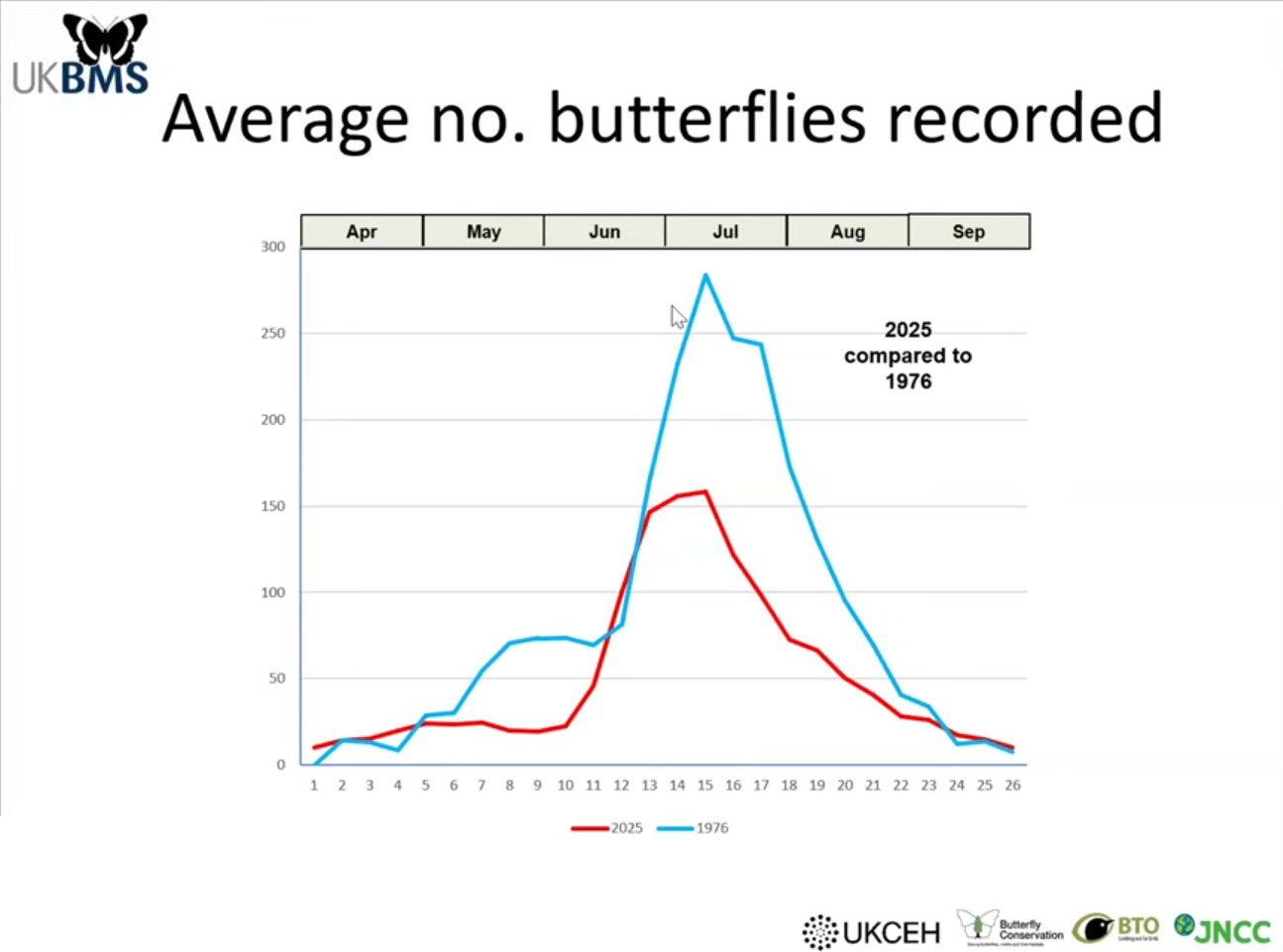 Using the remarkable summer of 1976 as a baseline may overstate declines
The good news is that levels of recording have increased, which is fundamental to the conservation of all our butterflies, and there were far more butterflies to record in 2025. The recovery of some species was quite remarkable and, encouragingly, several species that did poorly in 2024 showed significant increases. This was no doubt helped by much-improved spring and summer weather: early emergence was a noticeable feature of 2025 and led, in some cases, to a second generation for species that are normally single-brooded. This bounce-back factor has recurred this Spring, with recorders reporting record numbers of species like Holly Blue and Orange-tip from their gardens and local walks.
Given all this, it seems a shame that Butterfly Conservation chose to highlight in subsequent publicity that 2025 was only ‘an average year’ and that many of the UK’s butterfly species are disappearing due to habitat loss, pollution and climate change because this does not tell the full story. Of the 59 native species monitored through the UK Butterfly Monitoring Scheme, 51 showed an increase over the previous year: Wood White, for example, was up 204% on 2024. Yes, 33 species show long-term decline, but numbers of another 25 (43%) have actually increased. The baseline used is 1976, a truly remarkable summer, and this may also lead to over-estimated rates of decline: a different starting point would show very different results.
Even if we accept the data at face value, it seems unwise to generalise. Some butterflies are hard to monitor as adults and searches for early stages can paint a totally different picture. Brown Hairstreak is a good example: we find at our monitored sites, such as Grafton Wood, that an apparent decline in adult numbers can be followed by an actual increase in the number of eggs found over the subsequent winter. Climate change means that many species are emerging earlier, presenting a challenge when timing recording; retaining fixed recording dates for initiatives like the Big Butterfly Count mean that numbers of some high-summer species have peaked before the count begins.
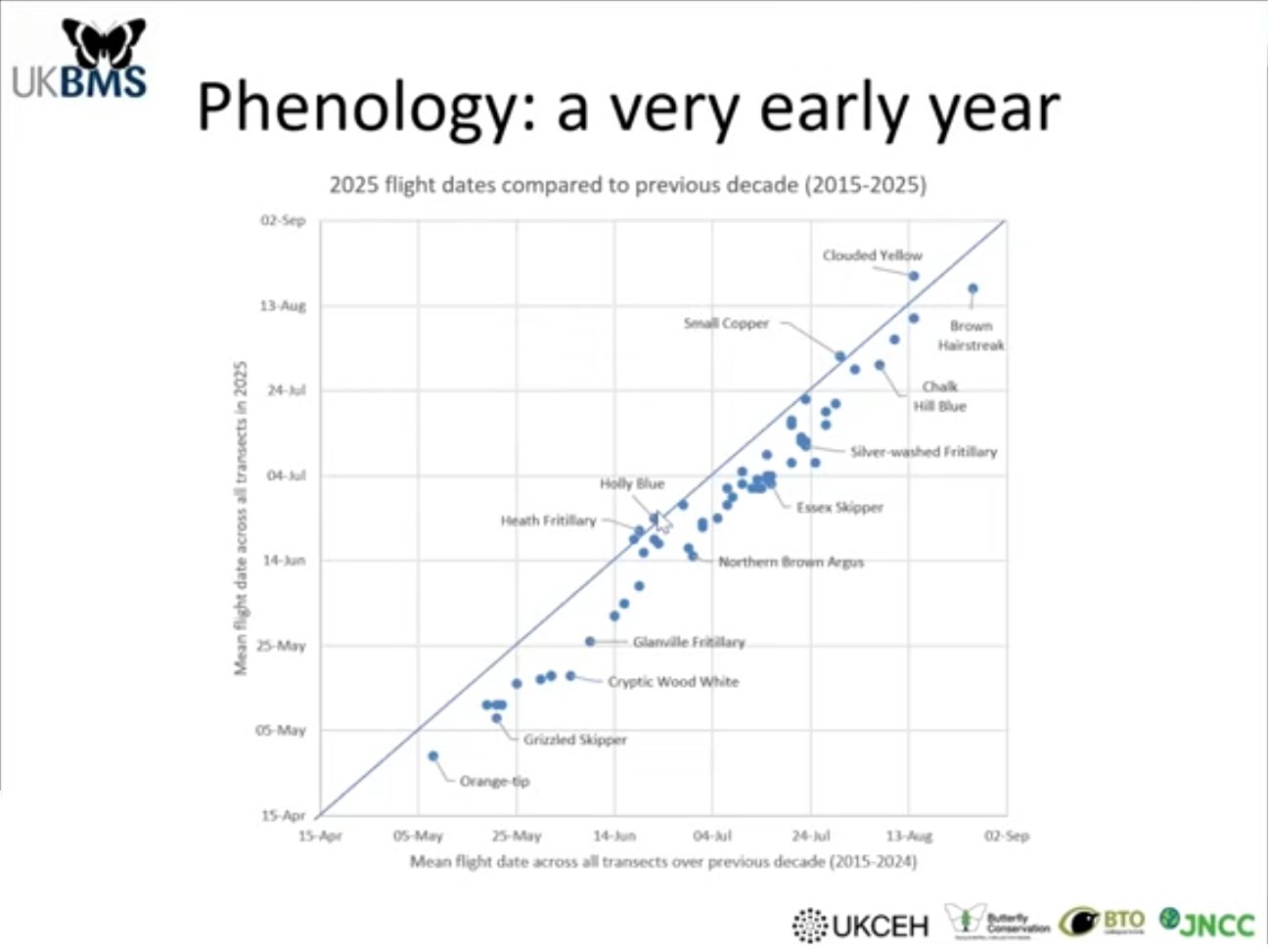 Most species emerged earlier in 2025 when compared with ten-year averages
Butterfly Conservation acknowledges that some adaptable species are coping, and even spreading to new areas, but suggests that specialist species restricted to particular habitats such as woodland glades or chalk downland have fared worse, with many declining at alarming rates. This is partly true but the real story is that many, including some of the specialists, are expanding their ranges, colonising new areas and responding to conservation efforts. In the West Midlands, we can point to Pearl-bordered Fritillary, Wood White, Brown Hairstreak, Purple Emperor, Silver-studded Blue and others that are showing positive trends. Much of this is due to the huge commitment of volunteers working tirelessly at local level and this is the story we need to be telling to win supporters to our cause.
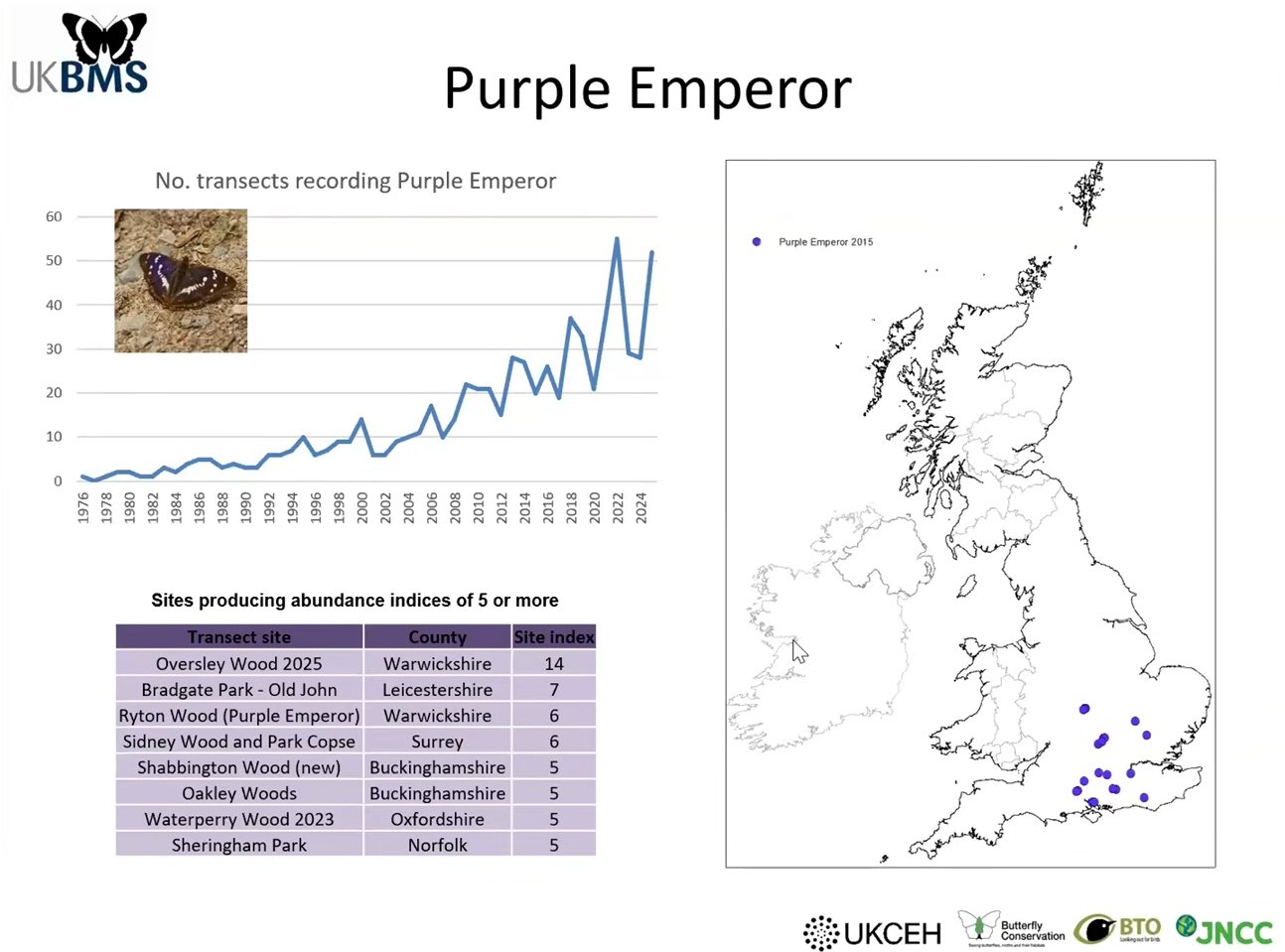 Some species are spreading into new areas
So, let’s not get too gloomy. Too much hand-wringing and negative messaging is largely counter-productive. Conservation actually works but we need more resources and support to provide added momentum. Most of us are only likely to join three or four conservation organisations and will choose those that we believe are making a difference. The volunteers who have gathered over 44 million records from 782,000 surveys, walking more than 1.5 million kilometres since 1976 at more than 7,600 sites (the equivalent of walking 40 times around the world – or to the moon and back twice) deserve better for their efforts.
You can watch a video of the meeting here.