Related Articles
Book Review
18th December 2025
2025 Butterfly Review
18th December 2025
Book Review - Western European Butterflies
31st January 2026
Book Review - In Pursuit of Butterflies
27th February 2026
2025 Review
Looking back on events and activities to see, record and conserve butterflies and moths in our region
January 2026
This proved to be a year of major upheaval for the regional conservation of butterflies and moths. Financial difficulties within Butterfly Conservation brought changes to the way in which the national charity operated with respect to branches. This led in the autumn to the formation of the West Midlands Butterfly & Moth Society (WM-BAMS), with the aim of bringing a more local, independent and volunteer-led focus to conservation work within the region. Throughout all this, locally, practical work to conserve butterflies and moths continued.
January
The Brown Hairstreak team undertook a number of egg searches, mainly in northern Worcestershire, with several new areas discovered. Conservation tasks were undertaken at Grafton Wood, Trench Wood, Monkwood, Penny Hill and the Wyre Forest, aimed at conserving key species.
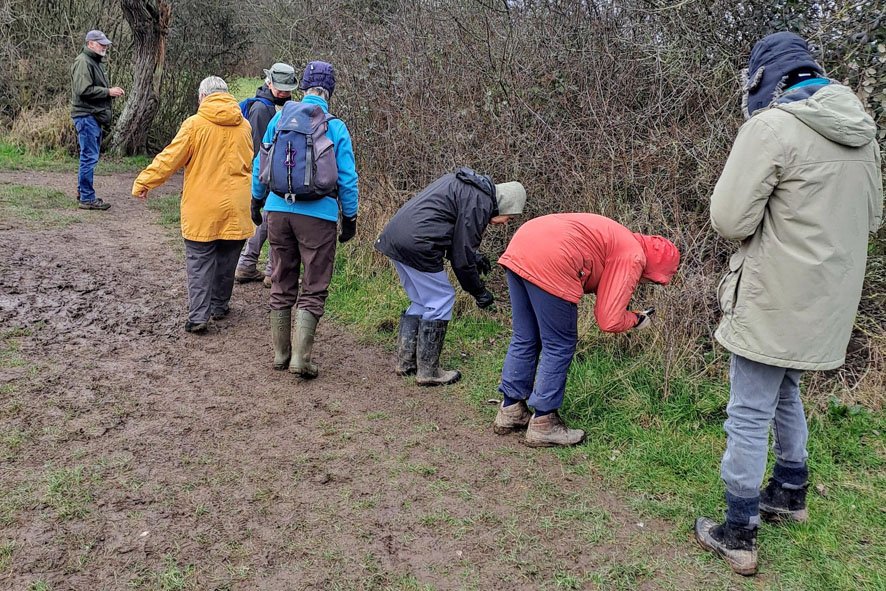 Searching for Brown Hairstreak eggs at Worcester Woods Country Park
February
Brown Hairstreak highlights were the first egg being reported from Worcester Woods Country Park, after several years of trying, and an improved egg count at Grafton Wood, including a 'quad'. Elsewhere, we spent a couple of days on the Long Mynd and Stiperstones reducing gorse that was invading Grayling habitats and, funded by site owner FCC Environment, we had the chipper in at Penny Hill to process material cleared by volunteers over the winter. In the Wyre Forest, thanks to a grant from Natural England, we were able to clear conifers and birches as part of the project to return the Kentish Glory moth. Funding from Telford and Wrekin Council enabled us to produce an ID guide to the butterflies and day-flying moths of that area. At the end of the month, we were sorry to say goodbye to Natalie Norton, Butterfly Conservation's Regional Landscape Officer, whose contract came to an end and was not renewed.
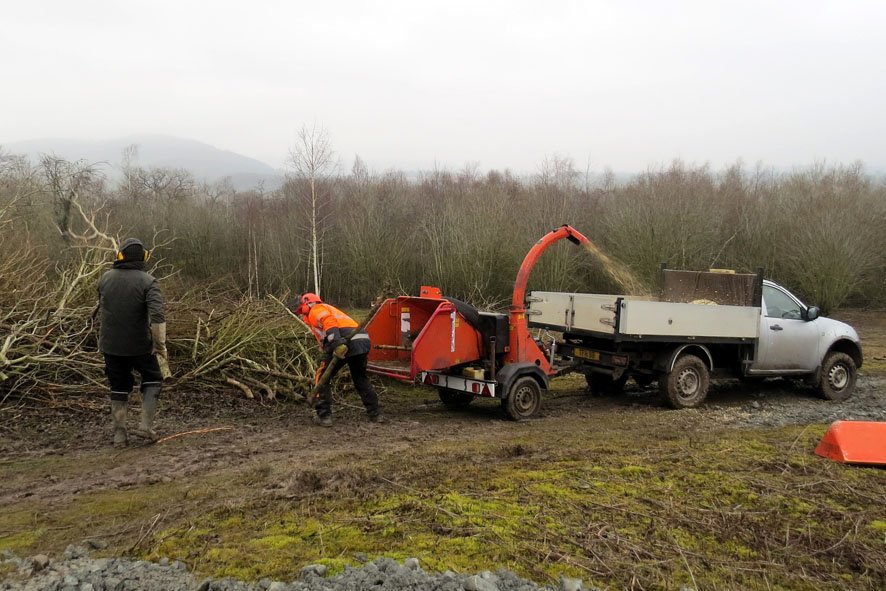 Chipper in action at Penny Hill Quarry, with support from the owners FCC Environment
March
We reviewed the conservation tasks done over the winter and planned for the coming season, especially monitoring and survey work. A butterfly ID session was run for volunteers at Pelsall Common to try to boost recording in this part of the Black Country. There was still time, however, for more work on the Stiperstones for Grayling, in the Wyre Forest for Kentish Glory and at Trench Wood, a nature reserve managed jointly by Butterfly Conservation and Worcestershire Wildlife Trust; partnerships with other organisations underpin much of our success.
A final flourish from the Brown Hairstreak survey team was the discovery of eggs around Mucknell Abbey near Worcester Parkway station, the site of a planned new town (confusingly to be called Wychavon). Such discoveries are really important and we've fed the information to those involved with planning the new development, in the hope that some key blackthorn areas will be retained. With better weather later in the month, several species were already on the wing, including Emperor moth and Large White (which went on to become West Midlands Butterfly of the Year).
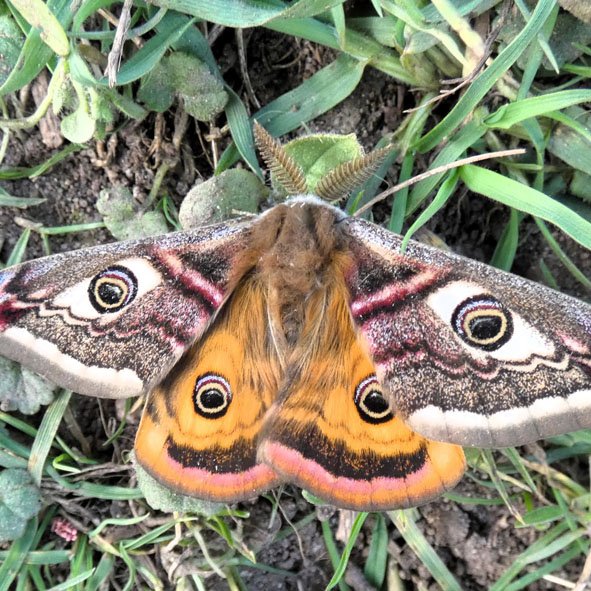 Emperor moth (Mike Southall)
.jpg) Large White (Joanna Kelly)
Large White (Joanna Kelly)April
Mainly fine weather had a largely positive effect on Spring butterflies and brought early emergences. Both Pearl-bordered Fritillary and Wood White were on the wing by the middle of the month, a good two weeks earlier than in 2024. It was good to see both these species and Dingy Skipper respond well to conservation work undertaken at various sites during the previous winter – very encouraging for the volunteers involved. With the start of the main flight season, the emphasis always shifts away from habitat management and towards recording and monitoring our most threatened species; we held a new recorders' day in the Wyre Forest to train new volunteers.
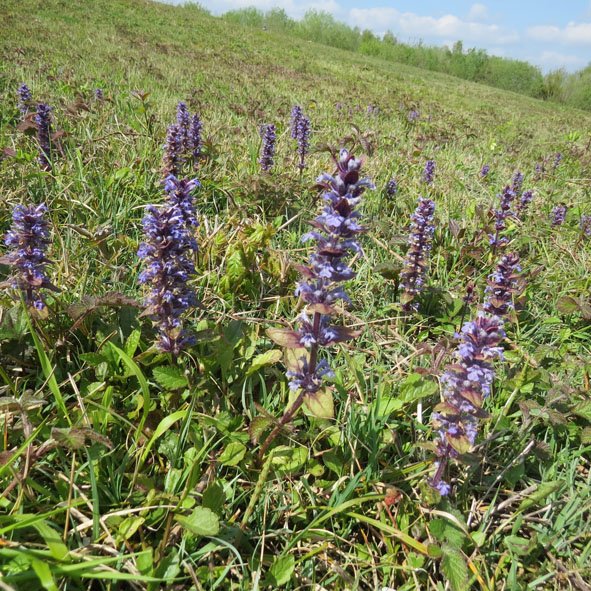 Bugle responded well to management at Penny Hill landfill site
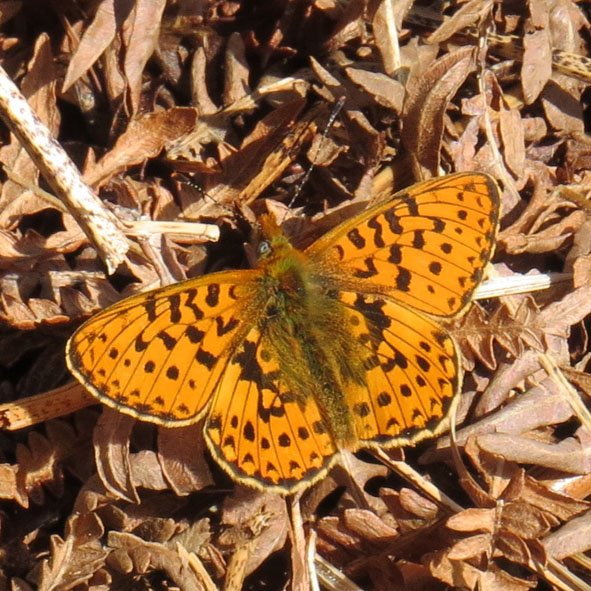 Pearl-bordered Fritillary was seen very early in the Wyre Forest
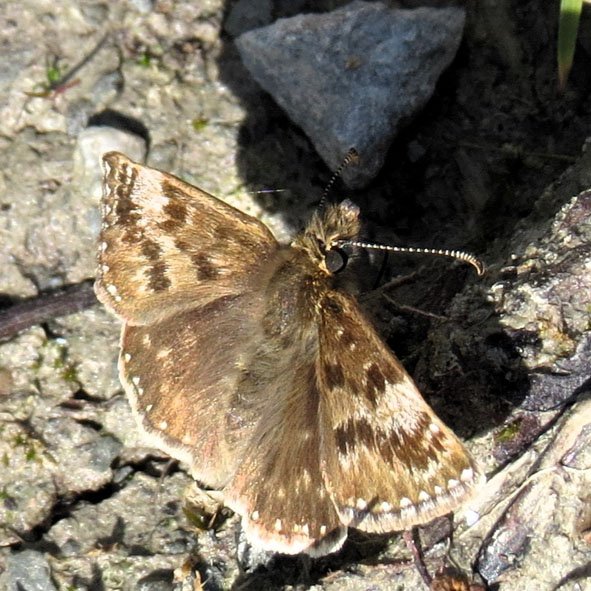 Dingy Skipper first seen at Llanymynech on 4 April - a month earlier than in 2024
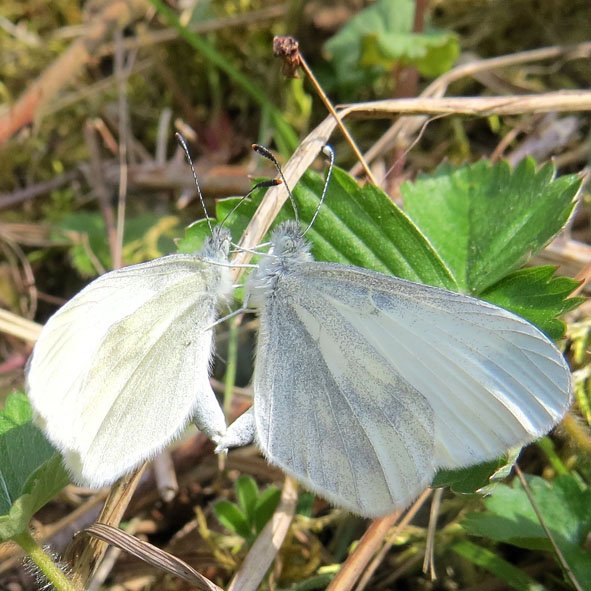 Wood White continues to spread - this mating pair seen at Penny Hill landfill site
May
Early in the month, we returned to Broadway Quarry and our project to support Small Blue's tenuous grip in Worcestershire by planting Kidney Vetch, with the support of the site owners. The plants had been badly affected by drought, although we hoped they'd recover, and there were no Small Blues. Still, Dingy Skippers were present and Green Hairstreak was recorded for the first time.
Two Worcestershire Wildlife Trust reserves were visited in search of Brown Hairstreak larvae using ultra-violet light after dark. This proved an interesting experiment and the results were written up in issue 122 of BCWM's magazine, The Comma. Our survey showed that 62% of over 50 marked eggs reached pre-pupation, far more than anticipated. More larvae were found in the same way at Trench Wood, along with several Brimstone larvae showing some fluorescence – a new discovery.
Work continued on the Kentish Glory reintroduction project in the Wyre Forest, with a habitat survey of potential sites. The survey showed how quickly sites can become less suitable for this moth and highlighted the need for proactive and regular management of birch scrub. Also in the Wyre, we continued work on Clearwing moths and were rewarded by the discovery of a new site for the rather elusive Large Red-belted Clearwing: two were attracted to a pheromone lure late in the afternoon of 15 May. This was followed by a successful public moth morning, in conjunction with Natural England as part of National Nature Reserves Week, which produced around 65 species including a Pine Hawk-moth.
First sightings of Meadow Brown, Marbled White and even Large Heath came before the end of the month. Pearl-bordered Fritillary had a fairly successful season, with the Malverns reintroduction project going from strength to strength, but Small Pearl-bordered struggled for a second year.
May ended on a sad note, with the loss of Regional Manager, Rhona Goddard, who moved on to Worcestershire Wildlife Trust. Within three months, as a result of financial cuts and operational changes, Butterfly Conservation went from two full-time staff members in the West Midlands to none.
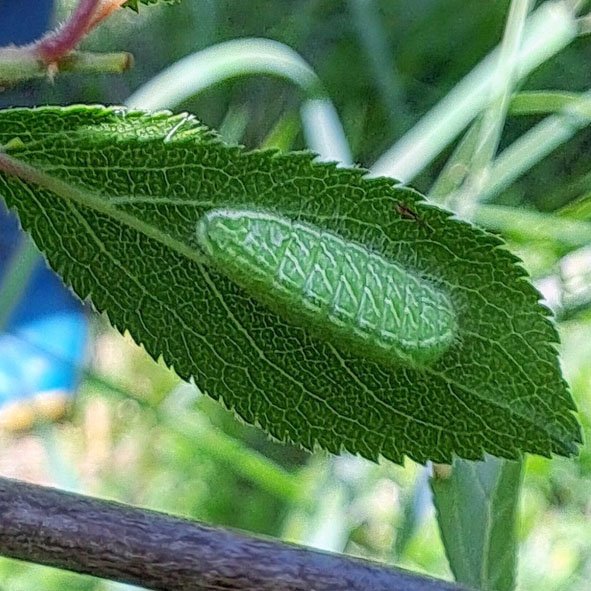 Almost fully grown Brown Hairstreak larva
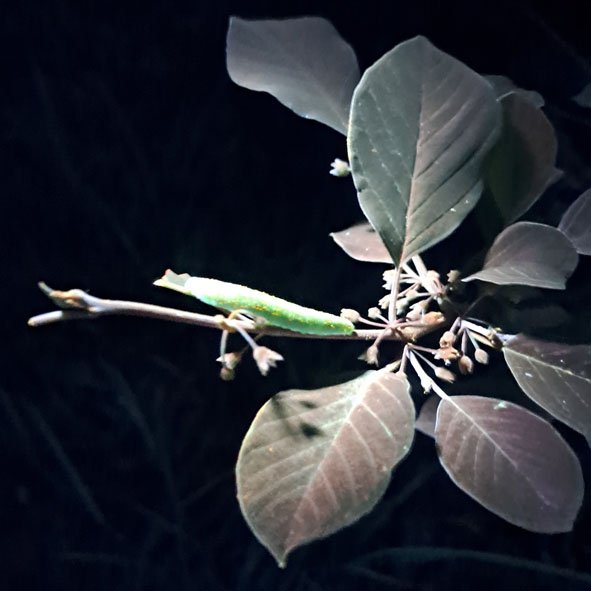 Brimstone larva under UV light at Trench Wood
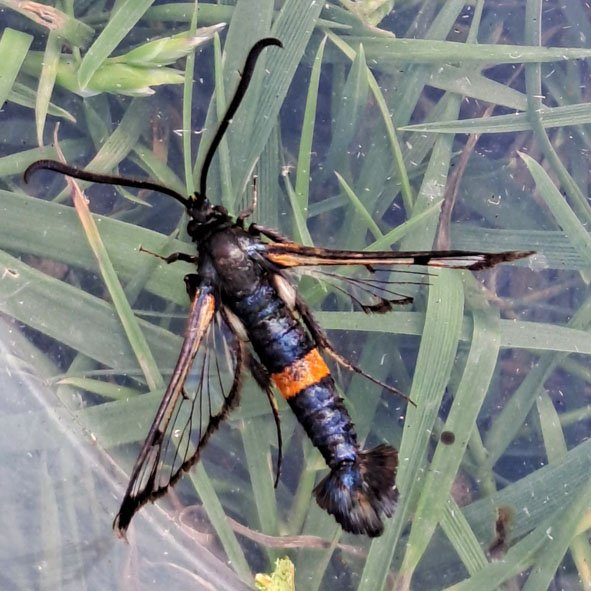 Large Red-belted Clearwing in the Wyre Forest
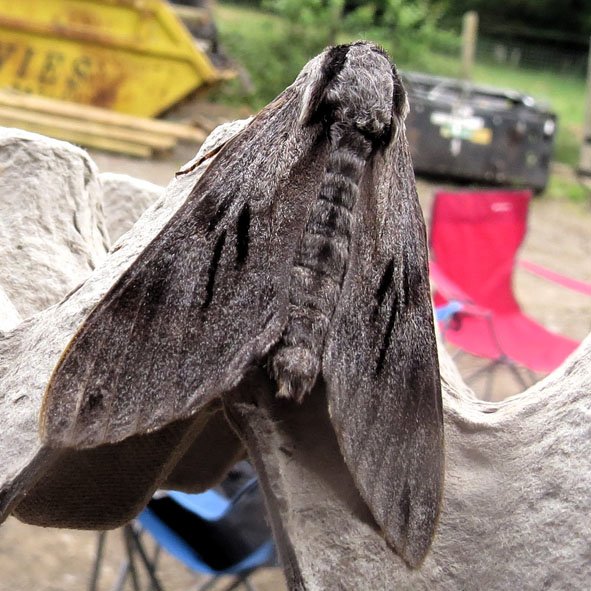 Pine Hawk-moth at the Wyre Moth Morning
June
We continued our studies with ultra-violet light but moved our focus from Brown Hairstreak to Purple Emperor. Only the pupae fluoresce and we were delighted to be able to locate them at both Roundhill and Trench Wood, demonstrating the value of this new recording tool in providing exact information on breeding locations for different species. Many found were quite high on sallow bushes and, without the use of UV, there would have been no chance of discovery. Adult Purple Emperors were on the wing around the middle of the month and there were new sightings across the West Midlands.
Small Pearl-bordered Fritillary only has one remaining site in Staffordshire and it was good to work with other conservation groups to survey marsh violets in the Sherbrook Valley on Cannock Chase. The food plant was widespread but mainly growing in conditions unsuitable for egg-laying. The good news is that the species has been included as a priority within local nature recovery plans and we hope this will eventually result in positive management on the ground.
After our failure to find Small Blue in Worcestershire in May, we were pleased to record good numbers at Rattlechain Lagoon in the Black Country. The site is threatened by housing development and an excellent case to protect the site was made by local conservationists later in the summer at a Public Enquiry. The site owner had bulldozed most of the site earlier in the year, although ironically this had created more, rather than less, habitat with large swathes of kidney vetch appearing on the newly created bare ground.
A very successful moth morning was held with the National Trust at Croome Court. Moth of the morning was definitely Garden Tiger (increasingly rare in lowland areas), with good records of Privet Hawk-moth and Four-spotted Footman (classed as a rare migrant to the UK but seen at several locations in our region). Moth mornings are a great way to show that not all moths are 'brown, boring and eat your clothes'.
 Spot the pupa - one of four Purple Emperor found at Trench Wood
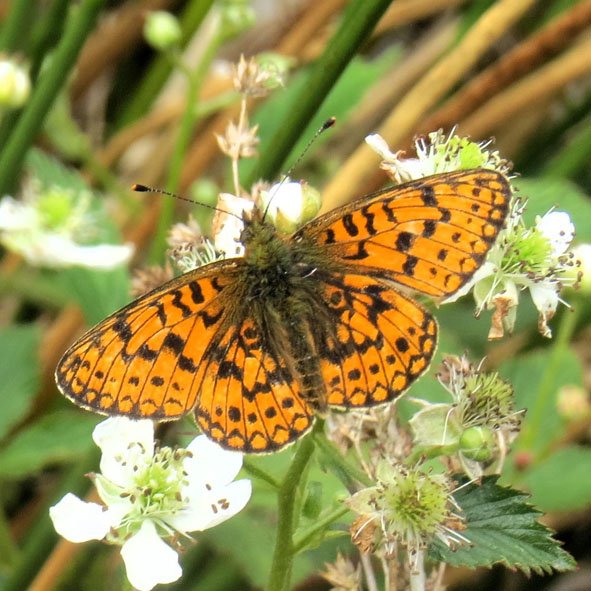 Small Pearl-bordered Fritillary on Cannock Chase
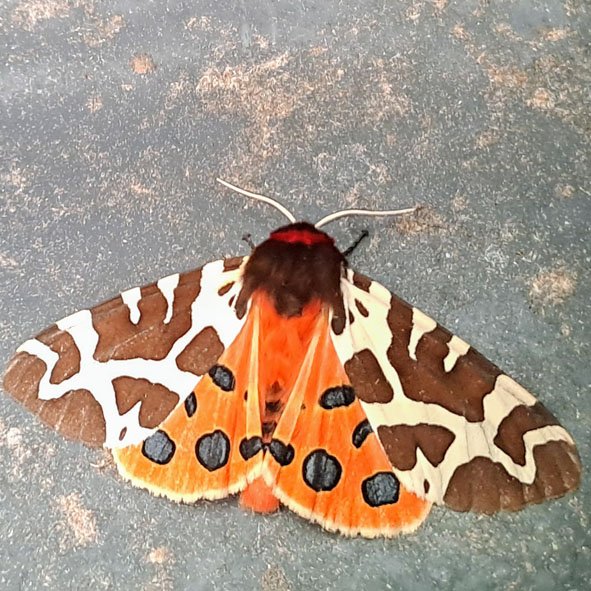 Garden Tiger at Croome Court
 at Croome Court.jpg) Four-spotted Footman (male) at Croome Court
Four-spotted Footman (male) at Croome CourtJuly
There was a distinctly mothy feel to the month. Moth of the morning at Bonnie's tearoom near Grimley was, appropriately, the Drinker and at Trench Wood we were pleased to record Mere Wainscot at its only known site in the West Midlands. Twycross Zoo launched a version of Monopoly featuring various conservation projects, including the planned reintroduction of Kentish Glory to the Wyre Forest.
Work on the Grayling butterfly continued with the discovery of new colonies on the Long Mynd, including 'Grayling Rock' at the start of the Burway, and the production of a leaflet, funded by the National Trust, describing the pioneering work undertaken by the Grayling Action Group at the Stiperstones.
Early emergences continued with our earliest-ever record of a Brown Hairstreak, on 8 July near Fladbury. A second was seen the following day at Smite Farm by Rhona Goddard, now working for Worcestershire Wildlife Trust.
This month marked the starting point of what later became a new volunteer-led and independent organisation, based in the West Midlands and focused on the delivery of local action for butterflies and moths. Many factors contributed to this decision but, in short, many of our long-term and experienced volunteers within the West Midlands Branch felt that changes in Butterfly Conservation were making it more difficult for us to recruit and retain volunteers, significantly reducing our ability to work effectively. Setting up our own group has enabled us to control our own projects and ensure that resources are applied exclusively to conserving species within our region.
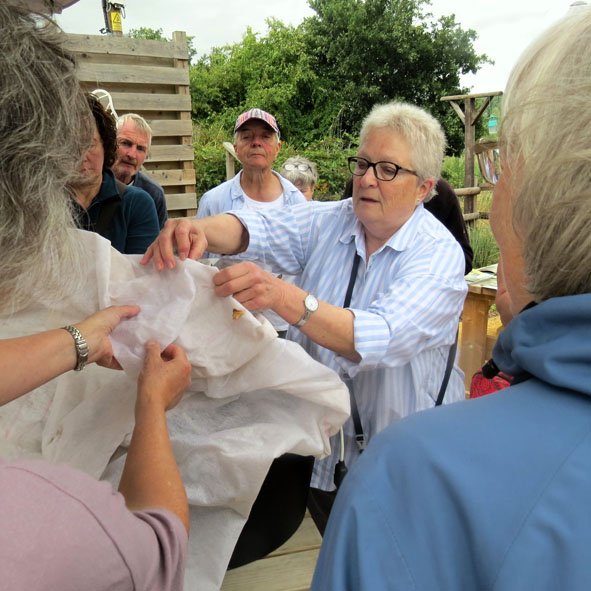 Unveiling a moth trap at Bonnies Tearoom
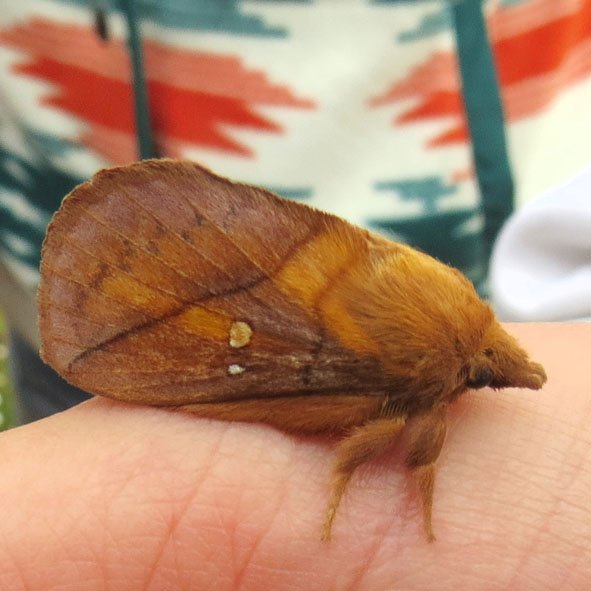 Drinker moth, seen both at Bonnies Tearoom and Trench Wood
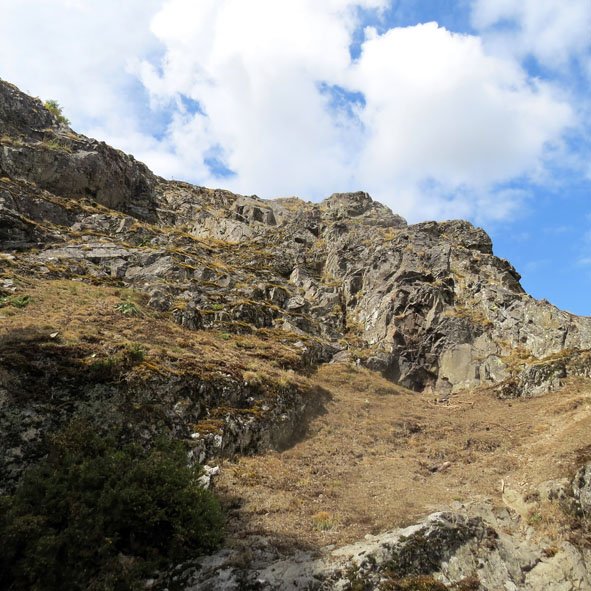 'Grayling Rock' at the start of the Burway
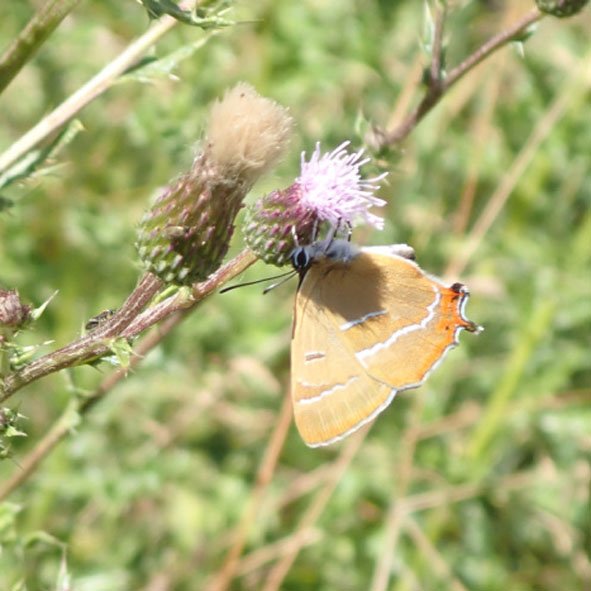 First Brown Hairstreak of the year on 8 July
August
Unexpected excitement came with the discovery of the long-extinct Large Copper at Bumble Hole Nature Reserve in the Black Country. Although this was an illegal release, enthusiasts flocked from far and wide to photograph what is a stunning species.
With continued good weather, the Big Butterfly Count attracted record levels of participation but the timing meant several featured species were well past their peak. With climate change resulting in early emergence of so many species, there may be a case for bringing the event forward.
There were unusual second generations in some normally single-brooded species, with reports of Dingy Skipper from several sites and a White Admiral at Grafton Wood late in the month. Adult Brown Hairstreaks, although scarce at Grafton Wood, were seen at other sites – good numbers for a field trip on the 22nd at Morton Stanley Park in Redditch. Some compensation for Grafton Wood was Clouded Yellow, which appeared on the edge of the wood and stayed around for several weeks.
A moth morning and butterfly walk at Upper Hollowfields Farm was well supported – our thanks to the Terry family, who hosted the event. Such events are really important, introducing a wider audience to butterflies and moths. A butterfly ID leaflet was published for the Forest of Feckenham and Worcestershire Wildlife Trust installed new information boards at Monkwood, featuring a Wood White trail; this species hit the headlines in Wales, with the first records for Montgomeryshire.
 at Bumble Hole.jpg) Large Copper (male) at Bumble Hole
Large Copper (male) at Bumble Hole.jpg) Clouded yellow at Grafton Wood (Craig Jones)
Clouded yellow at Grafton Wood (Craig Jones)September
More landmarks in the development of the West Midlands Butterfly and Moth Society: our new logo and website were launched, and we held our first events covered by our own public liability and personal accident insurance.
It was time to start planning our winter conservation tasks with various site owners. With the rapid expansion of Purple Emperor into our region, we took the opportunity to mark sallows for retention at both Monkwood and Trench Wood. Partnership with other local organisations is the key to success at so many of the sites where we are involved – maintaining these excellent relationships is a priority for WM-BAMS.
At a follow-up visit to Bumble Hole, we found Large Copper eggs and larvae in several locations: it will be interesting to see if any survive the winter and produce a new generation next year. Adults had been seen over several weeks, with a final record on the 9th.
Work parties began at Penny Hill landfill and Wyre Forest. The Brown Hairstreak team was quick out of the blocks and visited mainly Vale Landscape Heritage Trust land near Fladbury, where they found eggs in two new 1km-squares; this was the beginning of what would turn into an epic season.
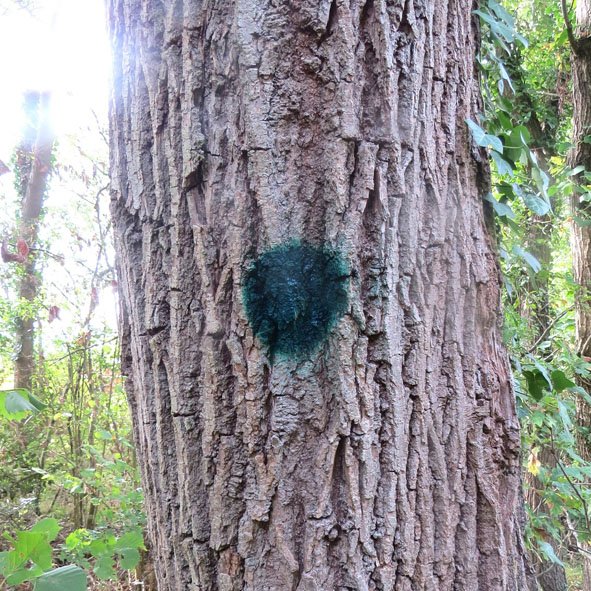 A sallow at Monkwood marked for retention, for use by female Purple Emperors
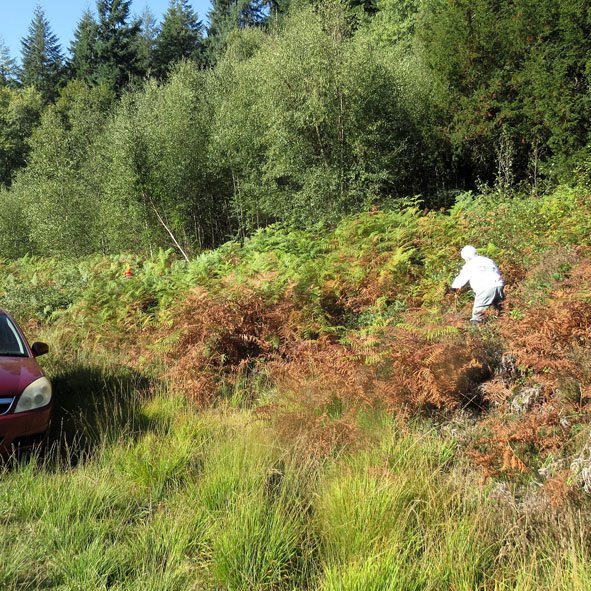 Improving breeding habitat in Brand Wood for Pearl-bordered Fritillaries
October
The month began with a well-attended Members' Day in Herefordshire for the West Midlands Branch, featuring two excellent speakers in Martyn Davies and Matthew Oates. Mike Southall stepped down as Branch Chair and was thanked for his work over many years. Mel Mason became the new Chair of the Branch, which remains a part of Butterfly Conservation, and he can be contacted at mbg.records@btinternet.com
Several other committee members resigned, some of whom have been instrumental in setting up WM-BAMS. This new volunteer-led group, which is independent of Butterfly Conservation, will concentrate on practical local action for butterflies and moths across the West Midlands and seek to recruit and encourage volunteers to get involved.
Despite these fundamental changes, good progress was made on several fronts: conservation tasks were undertaken at various sites, including further contractor work in the Wyre Forest for Kentish Glory, and a meeting of the Grayling Action Group at Stiperstones Village Hall, attended by over 20 volunteers, yielded a very encouraging report on the group's activities - great work on egg-laying and behaviour was shared.
The 2026 West Midlands Butterfly & Moth calendar and some locally designed Christmas cards went on sale to support WM-BAMS' work. They were available through our website and at the Shrewsbury Christmas Card Fair. The calendar proved to be a best-seller: our thanks to all the photographers who submitted their work. All funds raised are held locally and used exclusively to support conservation work in the West Midlands.
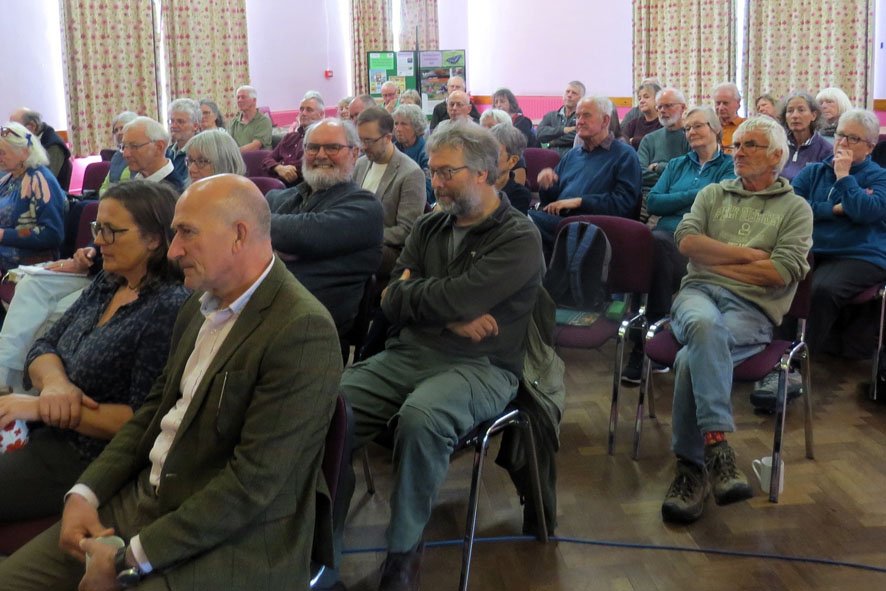 Well-attended Members' Day for Butterfly Conservation West Midlands
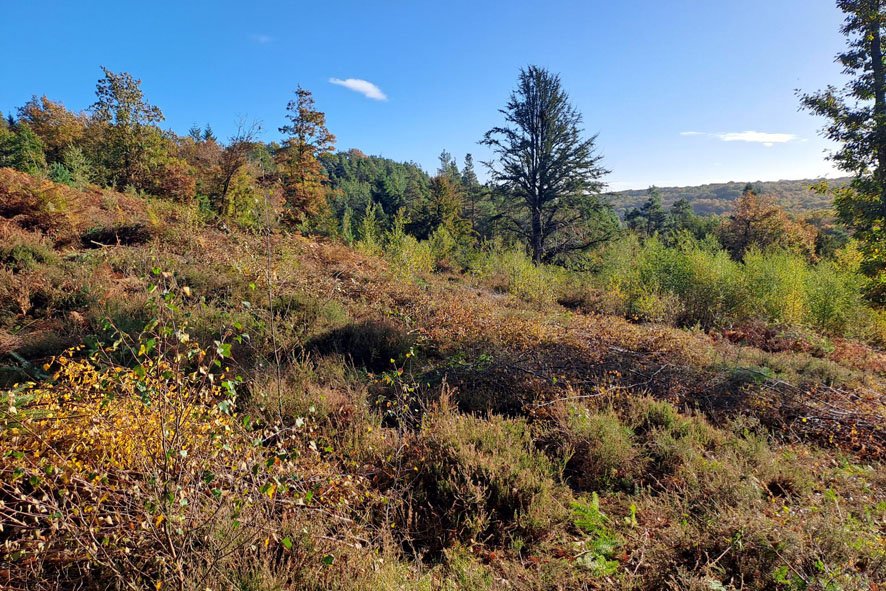 Management work in the Wyre Forest in preparation for the Kentish Glory
 November
The newly formed West Midlands Butterfly and Moth Society held its first committee meeting, giving an opportunity to reflect on the excellent progress made. A practical example of our work, which involved three committee members, was the planting of heather and honeysuckle at Comer Wood. This was done in partnership with the National Trust and funded by a legacy from the late Adrian Miles, who leased a cottage from the Trust in Comer Woods.
Our new pull-up banner had its first outing at Worcestershire Entomology Day, where committee member Jenny Joy gave a talk on Pearl-bordered Fritillaries in Wyre Forest – almost certainly the strongest remaining population of this species in the country. Other WM-BAMS volunteers were involved in conservation tasks at Penny Hill, one of the best areas for grassland invertebrates in Worcestershire, and in Wyre Forest, working alongside volunteers from Twycross Zoo to improve habitat for the planned reintroduction of the Kentish Glory moth. Our Brown Hairstreak survey team continued to map new areas and held a productive meeting with Redditch Council to discuss management in Morton Stanley Park, now a real hotspot for this species.
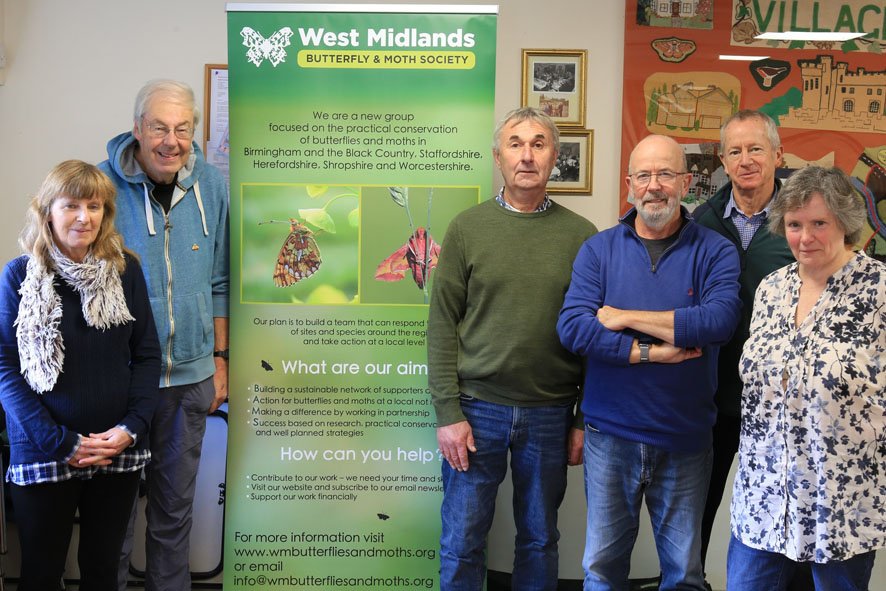 The WM-BAMS committee met for the first time
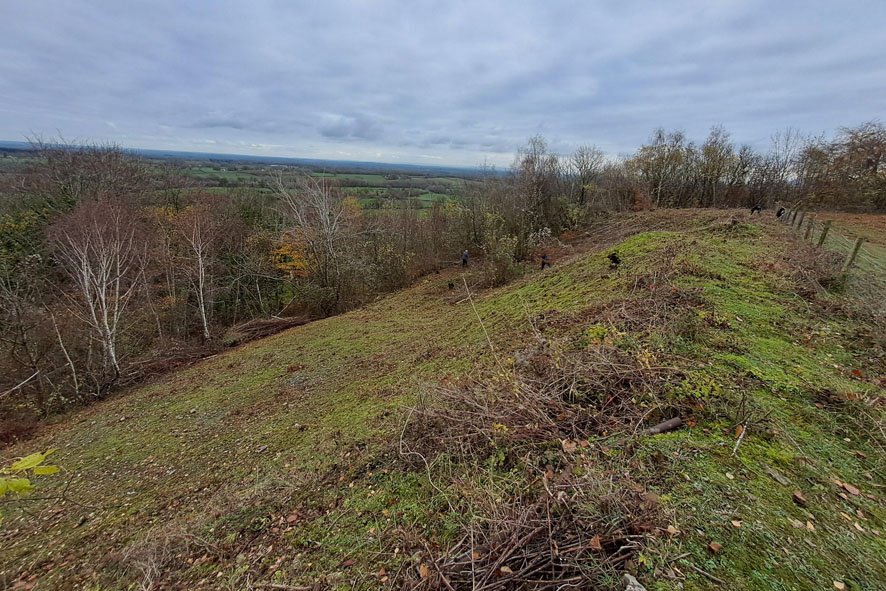 A newly cleared area of limestone grassland at Penny Hill landfill site
December
It seems as if we finished the year as we started, with conservation tasks at our regular sites, but everything has changed now that much of our volunteering is organised through WM-BAMS. Setting up a new group, while not without its challenges, has definitely been worth it. We are now in a position where we can pursue our own objectives, decide our own priorities, manage our own volunteers and ensure that all funds raised support the conservation of butterflies and moths in our own region.
A huge thank-you to all volunteers; whether you volunteer with us or our partner organisations, we couldn't deliver locally without you. There are so many ways to get involved – coming to work parties, taking part in surveys, alerting us to sites under threat, contributing to local fundraising, submitting photos for our annual calendar, helping out at events and gardening for butterflies and moths.
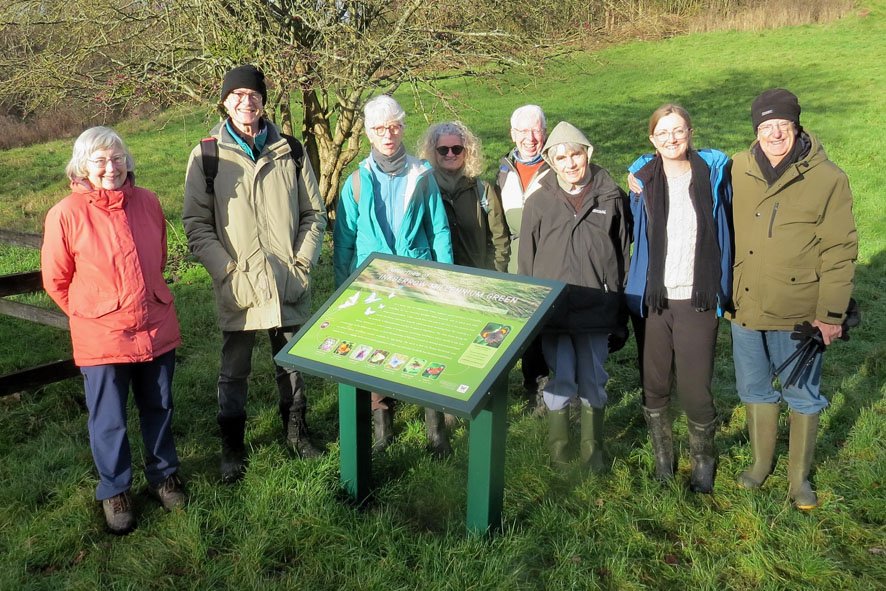 Fantastic work by the 'Thursday Streakers' monitoring the West Midlands' only population of Brown Hairstreak - every Thursday through the winter months, with occasional Saturdays. New volunteers always welcome: contact simonjprimrose@aol.com
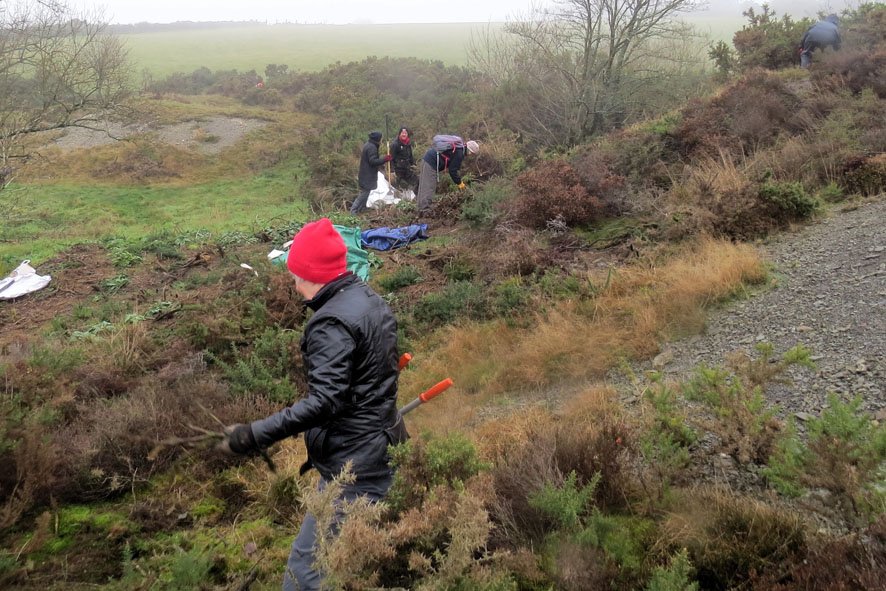 Gorse-bashing on the Stiperstones, enhancing habitat for Grayling. To join the Grayling Action Group, contact jenny.joy17@outlook.com