Related Articles
Book Review
18th December 2025
2025 Butterfly Review
18th December 2025
Book Review - Western European Butterflies
31st January 2026
2025 Review
31st January 2026
Book Review - In Pursuit of Butterflies
Marian Newell
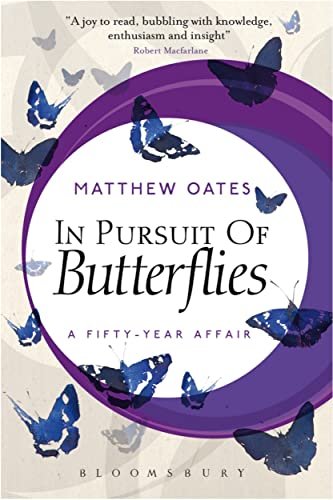
- ISBN: 9781472924520
- June 2016
- Bloomsbury Natural History
- Paperback, 480 pages
I'd had this title on my bookshelf for quite a while before finally settling down to read it over the Christmas break. I wasn't sure what I expected from a memoir of this kind, not my usual fare, but got so much from it that I thought I'd write a review despite it not being a new title.
About people
This is a personal story, about Matthew, his family, his schoolfriends, teachers, colleagues and more. Characters are often vividly evoked and the inspirational roles of some figures in Matthew's life are touchingly recalled.
Matthew himself has been interested in nature generally, and butterflies specifically, since boyhood. He worked as a freelance ecologist, went on to employment with the National Trust for many years as a conservation manager, and now devotes his retirement to the Purple Emperor.
About places
The ideas of home patch, heartlands and longing for home recur throughout the book, with a final look at Welsh words for such concepts that do not translate well into English. A map of key places for butterflies in the UK is labelled as Butterfly Heartlands. Matthew relates how he felt most at home in an old lodge where cold snaps were spent in one room huddled around a stove, and that he has never found that same sense of place again. Even so, he describes several heartlands to which he has developed a strong personal connection while working.
About nature
Having kept detailed diaries over his life, Matthew writes not only about butterflies but about all aspects of the natural environment, and vividly about the weather. I found myself remembering where I was and what I was doing during the snowfalls and storms of the 1980s. He draws together all these threads to relate how conditions affected butterfly numbers, timing and behaviours.
About the big picture
I've learned quite a bit about butterflies and moths since moving to Shropshire in 2012, having done some monitoring and edited the regional magazine for seven years. I'm not sure I realised just how much more there is to know or how little context I had for the snippets I'd picked up. For me, the value of this book was gaining more understanding of how butterflies live and how they're affected by conditions and changes.
I hadn't appreciated, for example, the impact of Dutch Elm Disease, so familiar from my childhood, on White-letter Hairstreak, for which it is a food plant. Thankfully, in that case the species has been able to use other elm species including disease-resistant types. Matthew describes various situations in which butterflies have proved more resilient than expected, and he has consciously tried to present a reasonably optimistic picture in this book, but he doesn't conceal how numbers have fallen over his lifetime and some of the pressures behind those declines.
A particularly interesting facet for me were his comments about the variable success of conservation work, cautioning against a belief that we can keep habitats as they are and arrest natural change. In nature, there is always change - things grow, other things die - and species need to have space and connected habitats so that they can move on in response to such change.
If like me you haven't devoted a lifetime to butterflies, you might find this book is a way to crib from a true devotee's knowledge and experience.