Related Articles
My Volunteering Story - George Davis
18th December 2025
My Volunteering Story - Marian Newell
27th February 2026
My Volunteering Story - Mike Williams
29th March 2026
My Volunteering Story - Trevor Bucknall
29th April 2026
My Volunteering Story - David Shearan
31st May 2026
My Volunteering Story - Jenny Joy
Four decades of conservation effort in Shropshire, some of it paid, much of it voluntary
Dr Jenny Joy
January 2026
I grew up in Cambridge on the edge of the fens and, while I was always interested in wildlife and landscapes (especially during our summer holidays in the Yorkshire Dales), they were never passions for me. When I came to Shropshire in 1989, I immediately fell in love with the place: unlike Cambridgeshire, it had hills, amazing views and unknown places off the beaten track where there was lots of scope for finding new things. However, having moved for my husband’s job, I was not sure what I was going to do.
I'd recently completed a PhD involving rats and cockroaches, parasitology and animal behaviour, which I did not really enjoy much to my surprise! I started training to be a driving instructor, as few women were doing that in those days and I'd already taught people to drive without any problems. I also joined Shropshire Wildlife Trust as a volunteer. They quickly realised I was capable of running projects and put me in charge of coordinating a research programme to look at water levels on Wem Moss in north Shropshire, as there were concerns it was drying out. Over the next few months, I met so many fascinating people that I thought I should put my own skills to good use. I therefore applied to the British Ecological Society for a grant to look at the ecological requirements of Large Heath at Wem Moss, having just picked the butterfly off the species list and found that the Trust knew nothing about it. Shortly after I heard my grant application was successful, somebody called Mike Williams got in touch with me to ask if I would extend my work to Whixall Moss, which was being devastated by commercial peat cutters. Little did I know how much that project and that meeting would change my life...
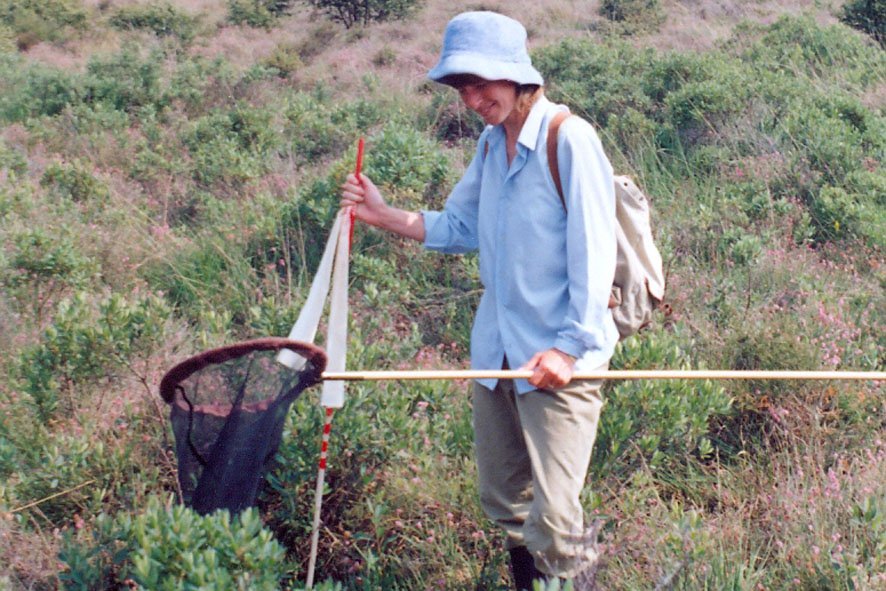 On Wem Moss in 1990
For the next 12 years, I had a great time applying for small grants that basically covered my expenses so I could carry out all sorts of butterfly projects, largely in Shropshire and Herefordshire. I was still involved at Whixall Moss and set up a research project with support from Keele University to look at overwintering caterpillars. I succeeded in getting funding from WWF to undertake detailed ecological work on Prees Heath (well before it was a Butterfly Conservation reserve). I worked with Adrian Miles on a White Admiral project in Comer Wood near Bridgnorth, did the initial survey for key butterfly species on the Long Mynd for the National Trust once they became involved there, undertook butterfly and moth surveys on former metal mine sites in south Shropshire and on the Telford & Wrekin Woodlands, and undertook lots of surveys on Forestry Commission sites across the region. Basically I had a ball and absolutely loved it! Doing the detailed ecological work is so important, as these details really matter in terms of conserving and enhancing habitats.
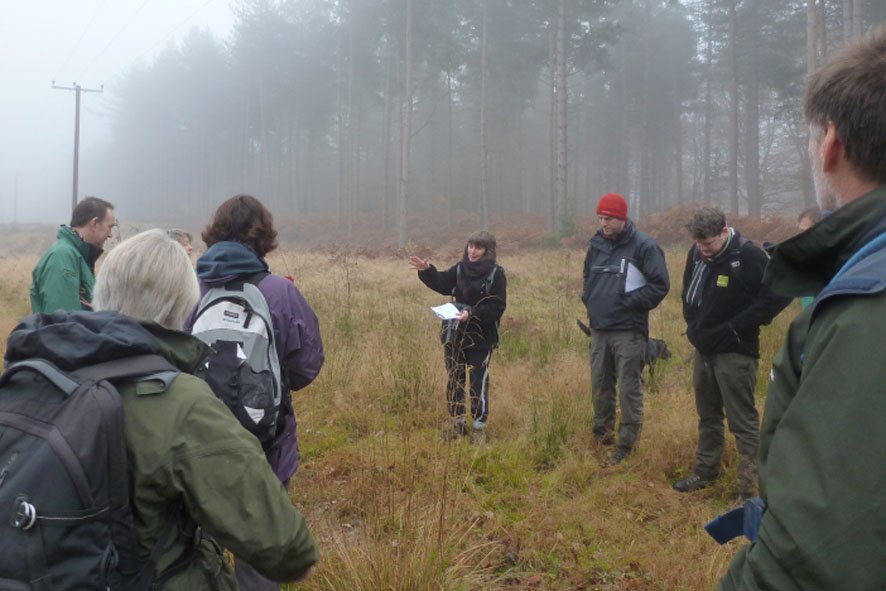 Talking about butterfly management in 2012
In 2002, I coordinated a widespread survey across the Wyre Forest on behalf of West Midlands Butterfly Conservation for Pearl-bordered Fritillary and I was captivated. Since then, I've never gone away in May as my annual surveys for this species are my favourite part of the year. Every year, I learn more about them such as their occasional lecking behaviour, increases in mud puddling, huge variety of nectar sources and, most importantly, what works and doesn't work for them on the management front. More recently, the focus has been on how they are being affected by climate change.
In 2003, I joined Butterfly Conservation as a Regional Officer for the West Midlands and stayed with them until 2019. During this time, I ran many projects on a variety of butterflies and moths involving multiple partners. I continued to have a close working relationship with the Forestry Commission, was involved in setting up Regional Action Plans in many parts of the country, and continued to be closely involved in species work at the Wyre Forest, Cannock Chase, Telford & Wrekin, and the Herefordshire Woodlands among others. I line-managed regional staff including Nick Williams, Mike Slater and Rhona Goddard and had a fairly good track record of fundraising for both staff-led projects and projects involving local volunteers (including myself).
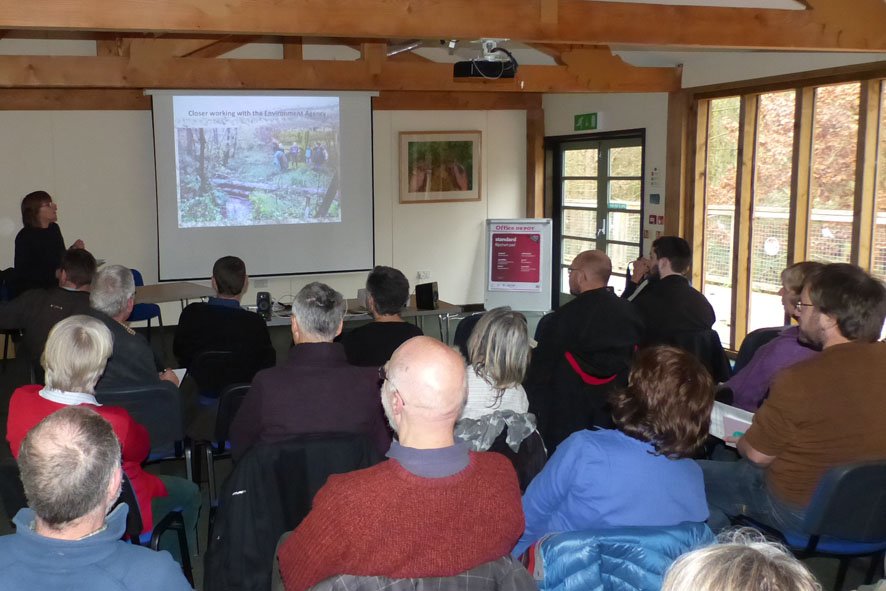 Giving a presentation at a meeting in 2015
After leaving Butterfly Conservation in 2019, I went back to what I love most: being back out in the field, carrying out monitoring work and learning more about habitats and species. I think there's an assumption that we know most things about our Lepidoptera but, while that might be true to some extent, there are always new things to discover and new ways at looking at things. I currently lead the Grayling Action Group in the West Midlands, which is investigating experimental ways of creating new habitat for this butterfly, and am still very involved in the Wyre Forest, now looking closely at interactions between Pearl-bordered Fritillary and Wood Ants. I recently helped to set up a bracken-management trial on the Long Mynd for Dark Green Fritillary and have been involved in work on Small Pearl-bordered Fritillary at Cannock Chase. We're also running a butterfly recording project in Telford this summer, in conjunction with Telford & Wrekin Council, as many of the local nature reserves are under-recorded.
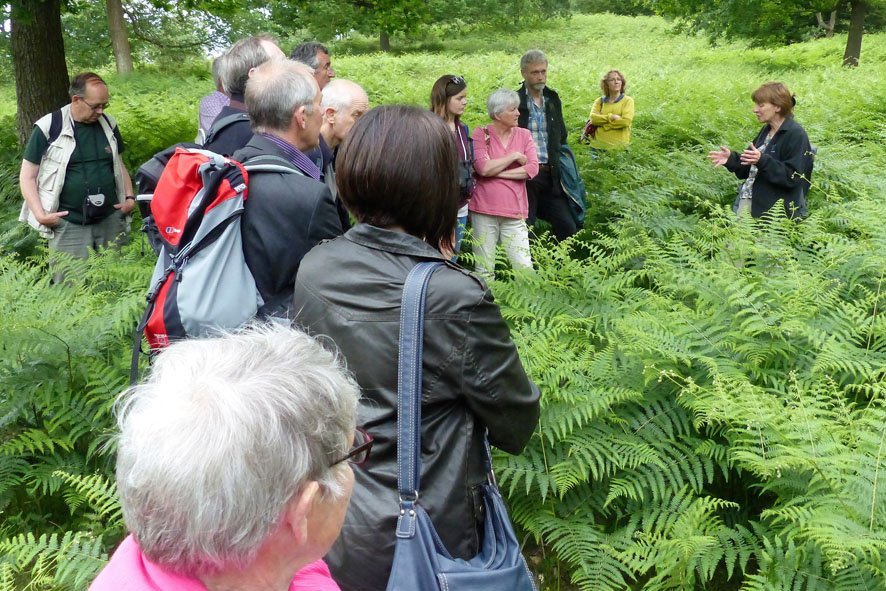 Addressing a group in the field
I never have a problem giving my time to what I regard to be an important Lepidoptera project and thoroughly enjoy sharing what I have learnt with others. My main problem is rarely saying no, so I'm always short of time, but maybe for me that is the right place to be! I'm delighted to have a role in WM-BAMS and very much want to encourage others to join in an activity that gives me so much pleasure and companionship, with a great feeling of achievement.
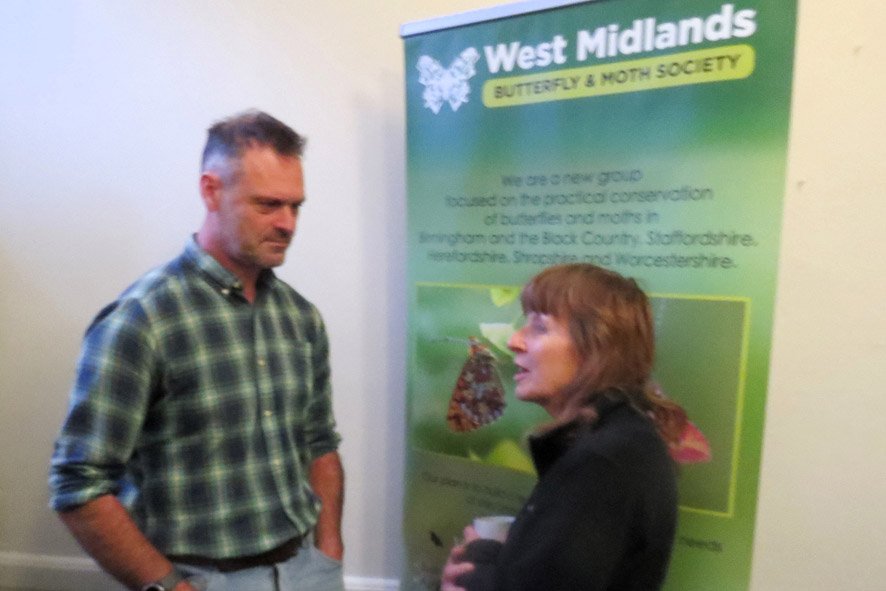 Representing WM-BAMS at the Shropshire Entomology Day 2026