Related Articles
ID Guide: Whites
13th January 2026
Putting Telford's Butterflies and Moths on the Map
29th March 2026
ID Guide: Golden Skippers
7th July 2026
Identifying Moths for Beginners
23rd July 2026
ID Guide: Fritillaries
The species of Fritillary seen in the West Midlands look similar from above - here we highlight the differences between them.
Photos: Steve Seal
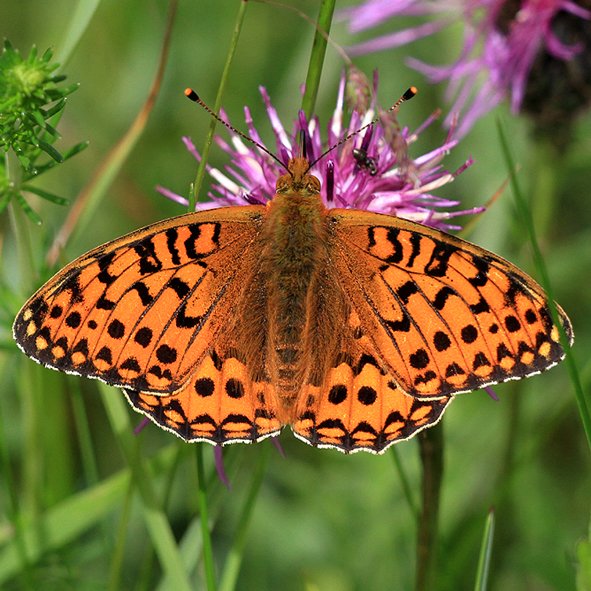
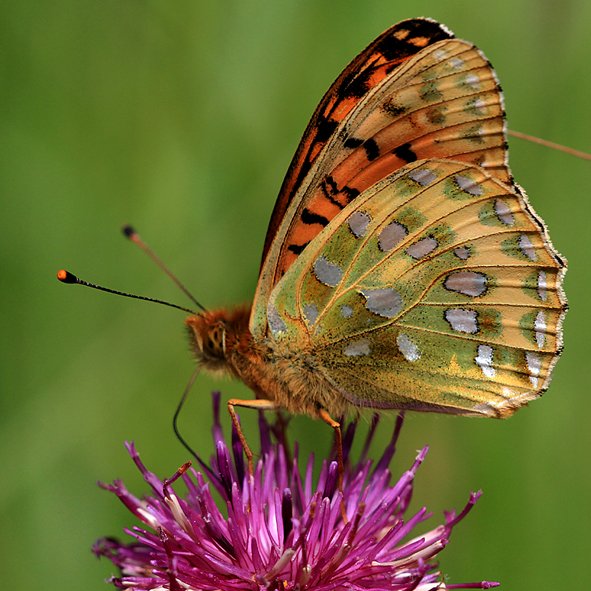
Dark Green Fritillary
Argynnis aglaja
Viewed from above, there is a line of chevrons along the edges of the wings.
Viewed from below, the wings are greenish with creamy edges and silver spots.
Wingspan: 58-68mm
Flight period: mid-June to mid-August
Suggested locations: Llanymynech Rocks, Shropshire Hills, Staffordshire Moorlands, Wardlow Quarry, Wyre Forest
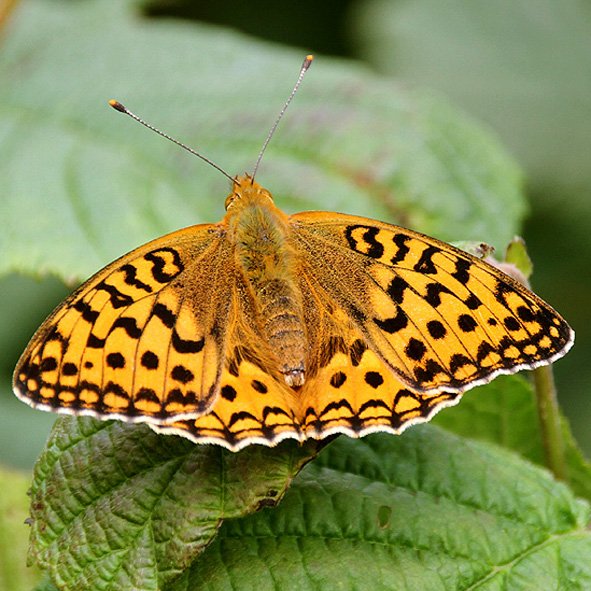
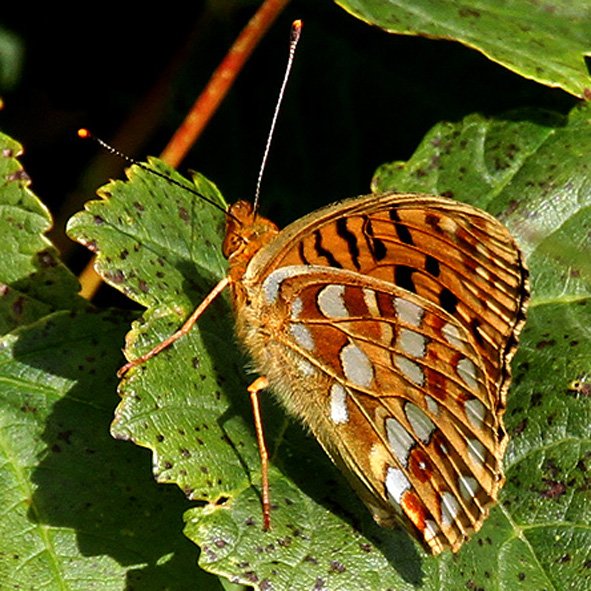
High Brown Fritillary
Argynnis adippe
Viewed from below, there are extra orange-rimmed silver spots near the outer edges of the hindwings.
Wingspan: 60-67mm
Flight period: mid-June to mid-August
Suggested locations: no longer present in the West Midlands but a site remains in South Wales
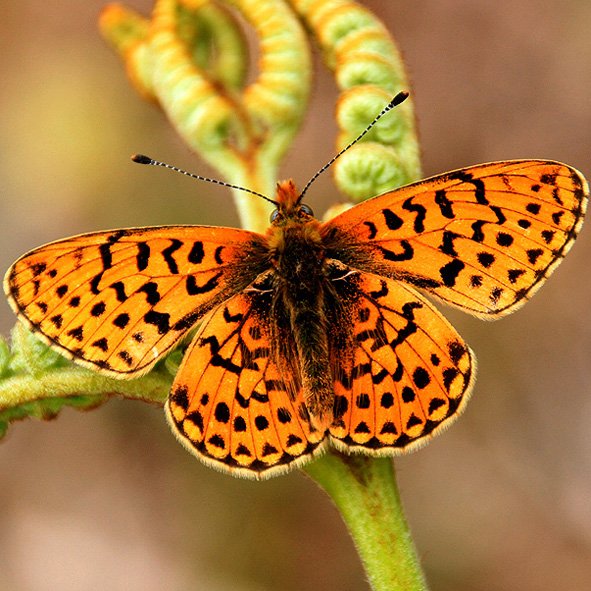
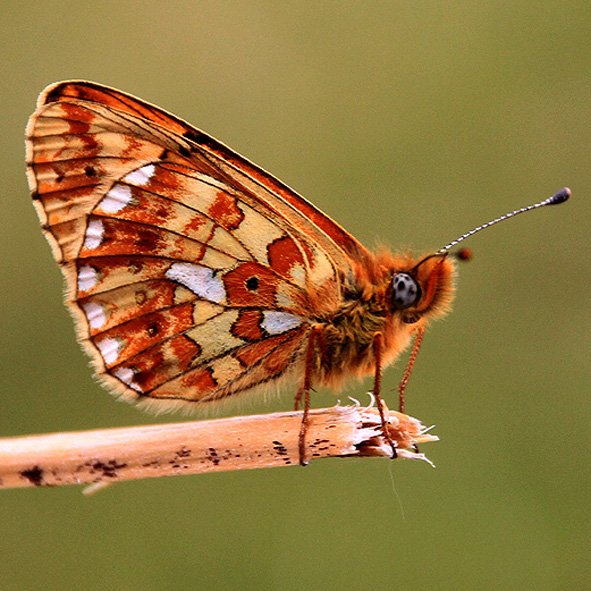
Pearl-bordered Fritillary
Boloria euphrosyne
Viewed from below, there is a pearl patch in the centre of the hindwing and another near the body.
Wingspan: 38-47mm
Flight period: late April to mid-June (overlapping but earlier than Small Pearl-bordred Fritillary)
Suggested locations: Ewyas Harold, Llanymynech Rocks, Malvern Hills
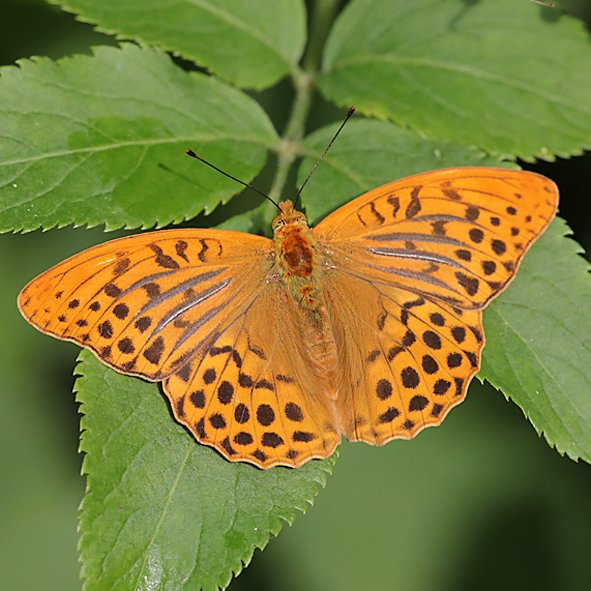
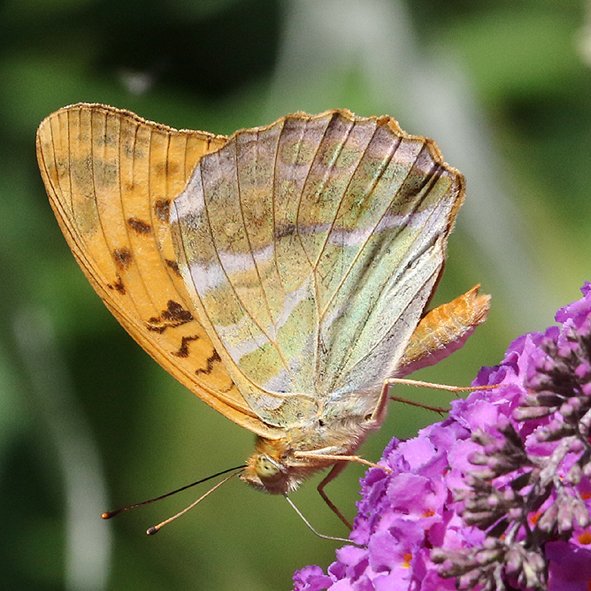
Silver-washed Fritillary
Argynnis paphia
Viewed from below, there are hazy silver streaks on the hindwings.
Wingspan: male 69-76mm, female 73-80mm (largest of these species)
Flight period:
Suggested locations: Coppett Hill, Grafton Wood, Mortimer Forest, Shobden Hill, Trench Wood, Wigmore Rolls, Wyre Forest
Note: Females come in a valezina form, where the orange markings are greyish-green or greeny-brown, and this is quite commonly seen in our region.
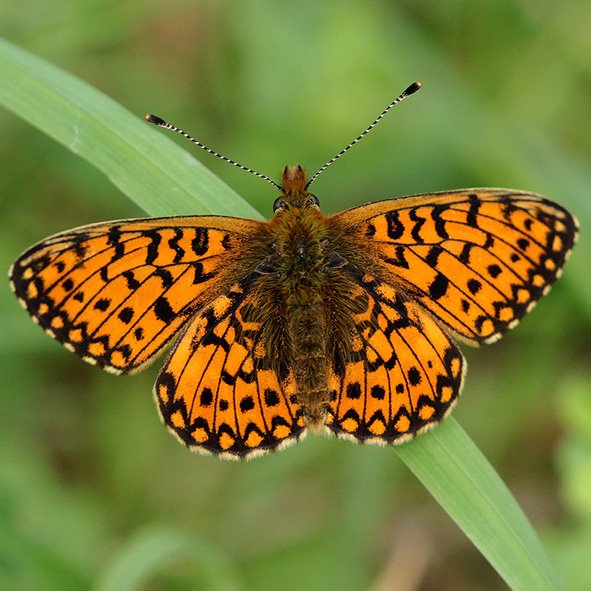
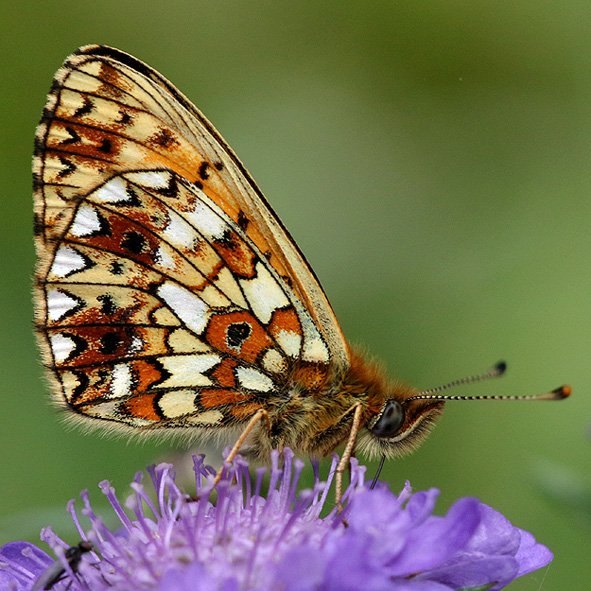
Small Pearl-bordered Fritillary
Boloria selene
The uppersides of the wings are brighter than on the Pearl-bordered Fritillary, with the black markings more smudged towards the apex of the forewings.
The pearl patches on the underside are more extensive than on the Pearl-bordered Fritillary.
Wingspan: male 35-41mm, female 38-44mm
Flight period: late May to mid-July (overlapping but later than Pearl-bordred Fritillary)
Suggested locations: Cannock Chase, Llanymynech Rocks, Wyre Forest
Find out more
The European Butterfly Group has various identification guides on its website, including two that cover the species in this article: