Related Articles
Winter Moths
18th December 2025
ID Guide: Whites
13th January 2026
Day-flying Moths
29th March 2026
Putting Telford's Butterflies and Moths on the Map
29th March 2026
ID Guide: Fritillaries
29th March 2026
Migrant Moths
29th April 2026
Moth Trapping for Beginners
31st May 2026
Festival of Change
29th June 2026
How does a moth hover?
29th June 2026
Moth Mornings
29th June 2026
Moth Trapping for Beginners: Tips
29th June 2026
ID Guide: Golden Skippers
7th July 2026
Revealing Romanian Moths
28th August 2026
Identifying Moths for Beginners
A round-up of printed and online resources from Mike Southall to help new moth trappers identify their catch.
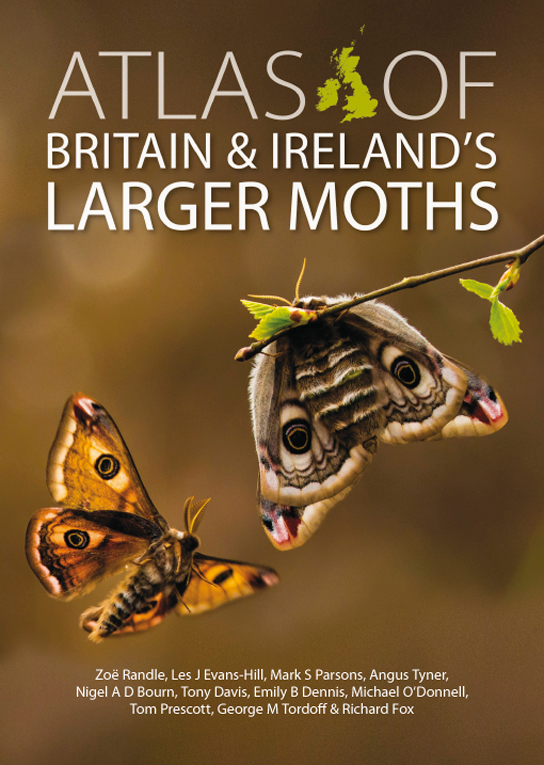
Printed
Most people begin by referring to the excellent field guides now available. Popular standards are:
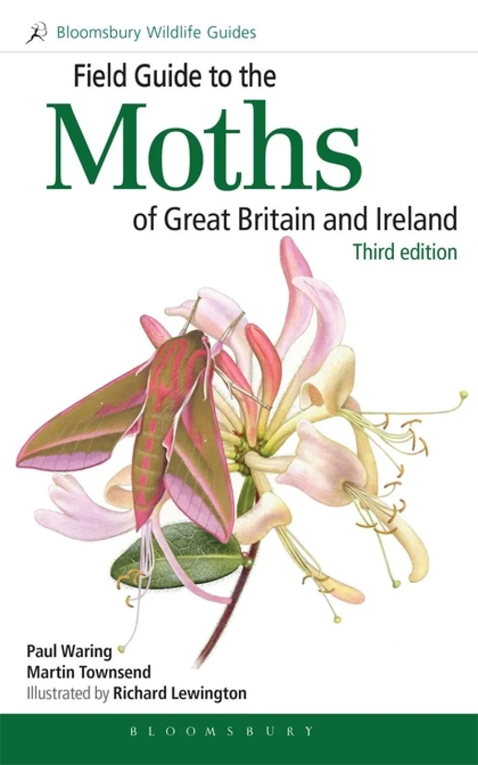
- Moths of Great Britain and Ireland by Paul Waring and Martin Townsend (3rd edition, 2018, ISBN: 9781472964519)
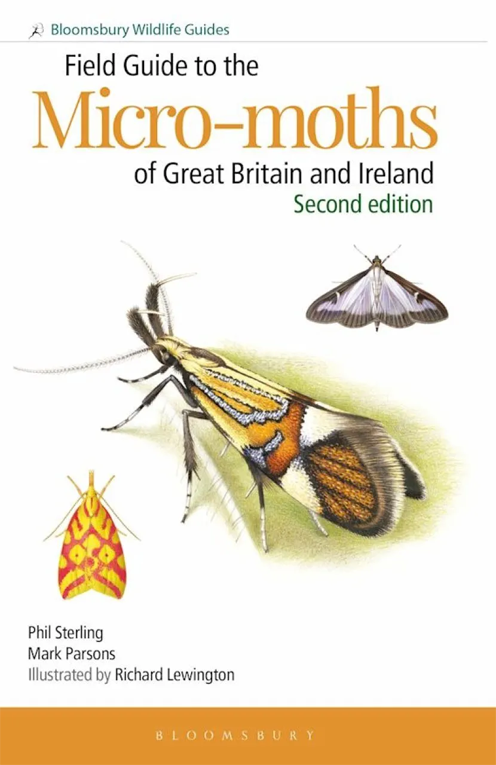
- Micro-moths of Great Britain and Ireland by Phil Sterling and Mark Parsons (2nd edition, 2023, ISBN: 9781472993953)
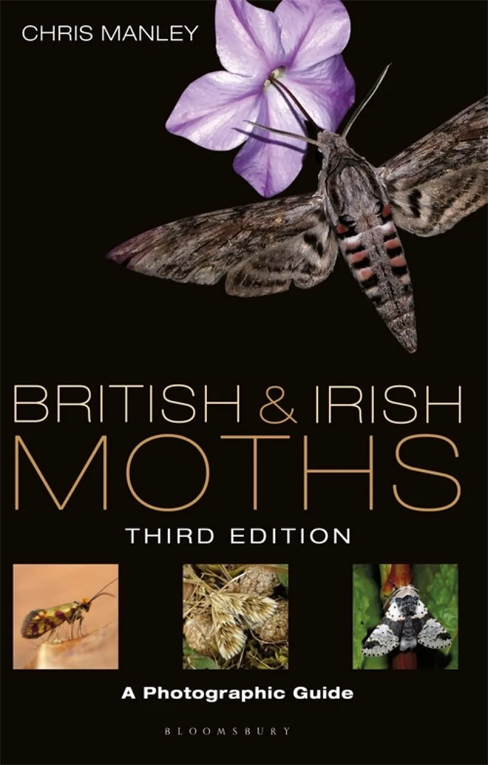
- British Moths by Chris Manley, a photographic guide that includes micro and macro moths (3rd edition, 2021, ISBN: 9781472975201)
The first two are expertly illustrated by Richard Lewington. All three come in updated editions as shown because our species and their ranges are changing rapidly, so books can soon become out of date.
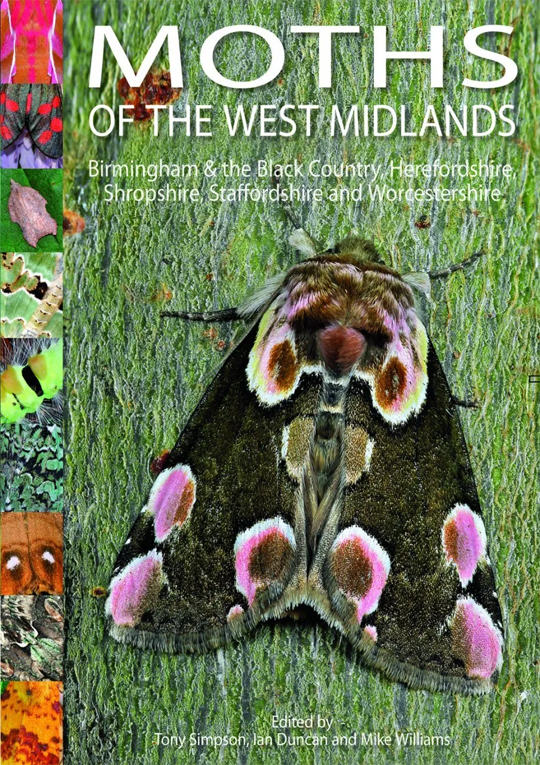
Moths of the West Midlands by Tony Simpson, Ian Duncan and Mike Williams is our most recent regional book, published in 2020 (ISBN: 9781874357926). It covers all of the macro moths and representative species of micro moths.
Also recommended is the Atlas of Britain and Ireland’s Larger Moths produced by the National Moth Recording Scheme in 2019 (ISBN: 9781874357827). This shows national distribution records and flight periods of macro moths, which are particularly useful when travelling to different parts of the UK or Ireland.
There are, of course, many other national and regional books for both moths and butterflies, some going back centuries, and all are collectable and a delight to study in their own right.

Online
If the literature has been studied and the moth still not identified, there are online resources that can be helpful:
- ObsIdentify is a free European application that suggests an identification for an uploaded image of a moth. Although this can work very well, it cannot always be relied upon for easy-to-confuse species or poor photos.
- Seek by iNaturalist is another free app, which doesn’t require registration and is therefore family-friendly. iNaturalist itself supports verification by others to help identify a species from a photograph and to log the record globally.
- Google Lens and Apple Visual Look Up are other mobile phone identification apps but these are generic and not specifically tailored to wildlife.
- Various Facebook groups, both regional and national, can be used to access expert help with identification. Two that spring to mind are West Midlands Butterflies and Moths and Herefordshire & Worcestershire Moths.
- West Midlands Moths, our regional online atlas, is updated regularly, making it the most up-to-date moth distribution resource available for the West Midlands. It's also a good way to share your best moth photographs and provides access to other regional atlases.
- UKmoths was set up to illustrate as many moth species as possible (2284 to date). It includes a Beginner's Top 20 – the most common ID requests received by the site administrator.

Verification
With experience, the commoner macro- and micro-moths that are attracted to light will soon become familiar. The moths that don’t fit into the usual sightings then begin to stand out from the rest. Any that need further study can be potted at the trap and kept in a fridge for short periods. It's always a good idea to photograph these before release so that you can include images for verification when you submit your records to iRecord.
If you think you have an outstanding rarity, inform a local expert or county recorder; they may well wish to have the moth retained for verification. It is also the county recorders who may be prepared to carry out the genitalia dissection required to separate similar species, particularly for the smaller micro-moths. Their details are available from the Info tab of West Midlands Moths. Please remember that they are all busy volunteers doing remarkable work over many years towards the verification of our moth records – only contact them when really necessary.
A few common moths that you may see
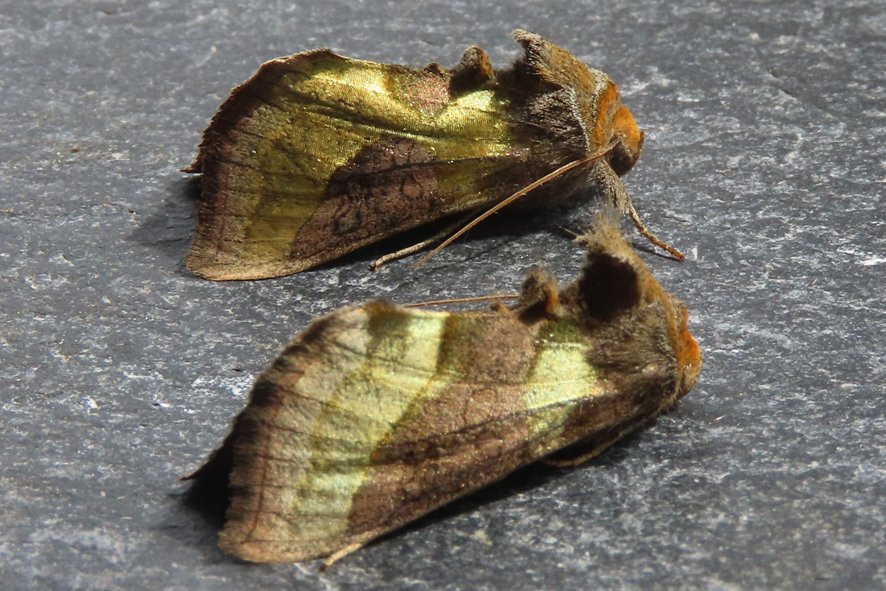 Burnished Brass in its two forms, the front with a complete central brown band and the rear with separate brown patches
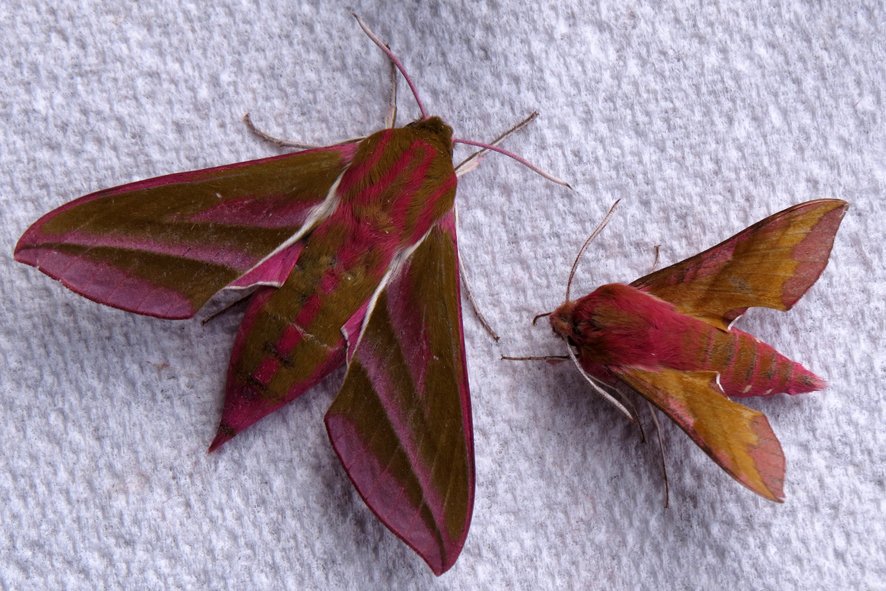 Elephant (left) and Small Elephant (right) Hawk-moths
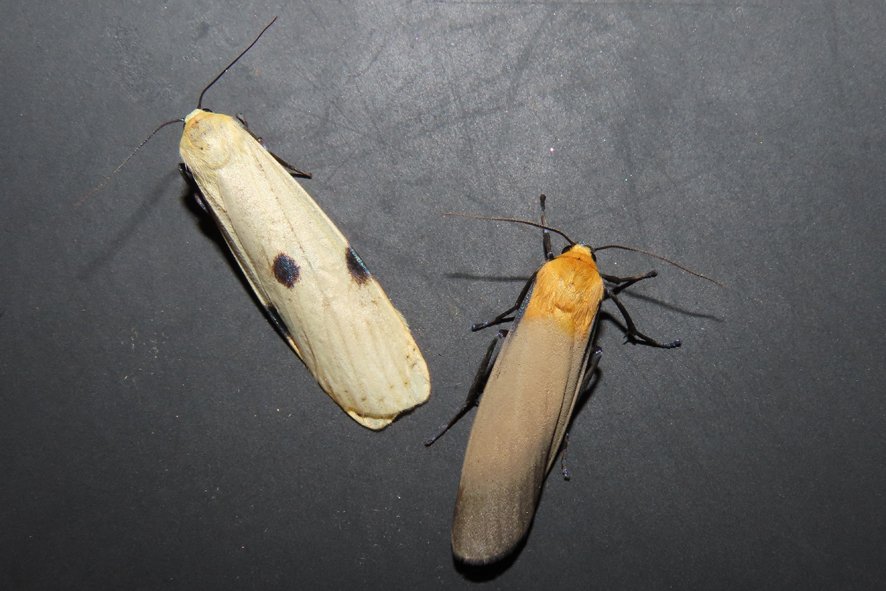 Four-spotted Footman: female (left) and male (right)
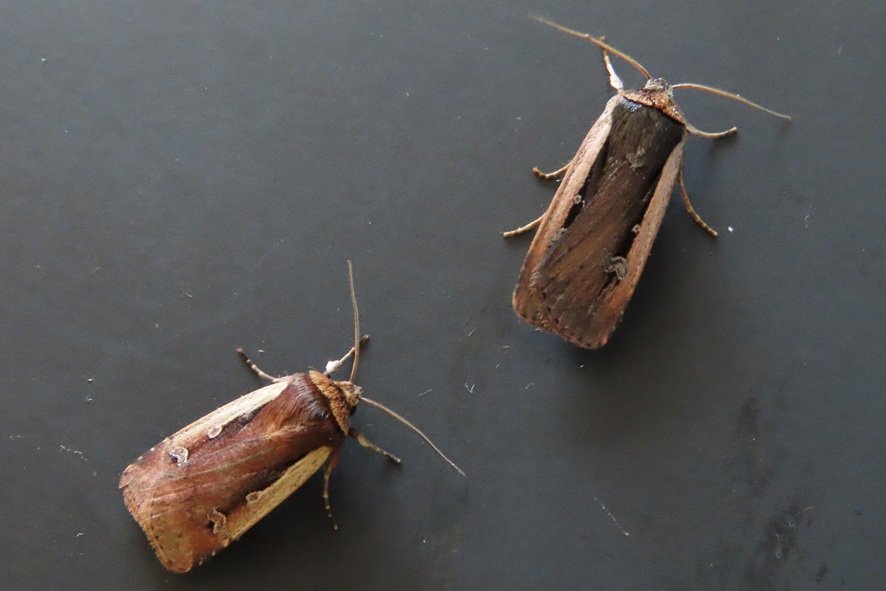 Flame Shoulder (left) and the very similar Radford's Flame Shoulder (right)
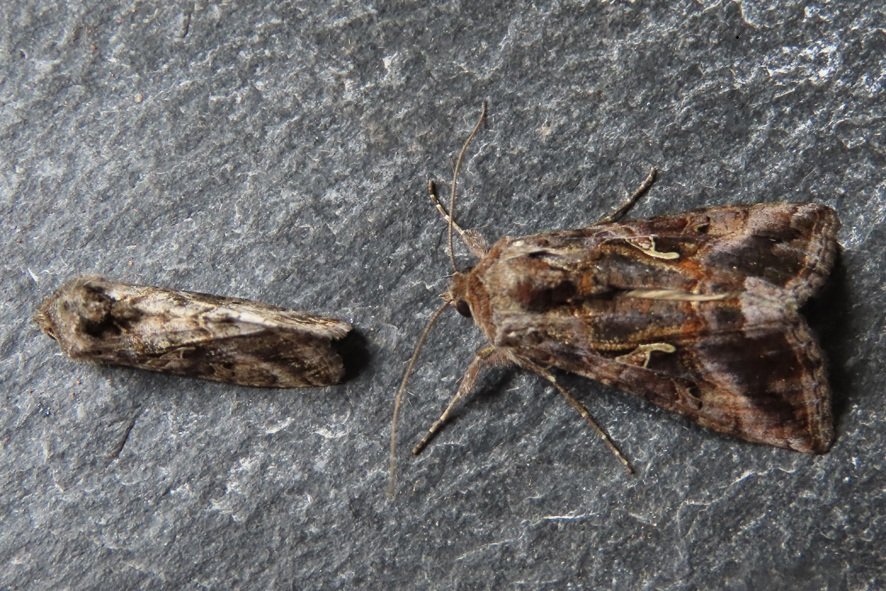 Silver Y: standard form (right) and the smaller aberration f. gammina (left)